For award-winning, internationally-acclaimed author Rosemary Sutcliff (1920-92). By Anthony Lawton: godson, cousin & literary executor. Rosemary Sutcliff wrote historical fiction, children's literature and books, films, TV & radio, including The Eagle of the Ninth, Sword at Sunset, Song for a Dark Queen, The Mark of the Horse Lord, The Silver Branch, The Lantern Bearers, Dawn Wind, Blue Remembered Hills.
One of the delights of Twitter is to follow such things as the Guardian newspaper style-guide (twitter.com/guardianstyle). But an entry today set me thinking about the confines of wheel-chairs, disability and how to use language.
The tweet read: “… say (if relevant) that someone uses a wheelchair, not is ‘in a wheelchair’ or ‘wheelchair-bound’ – (which is) stigmatising and inaccurate”. I am not so sure it is so simple, when I recall time spent with my godmother and cousin Rosemary Sutcliff – Romie, as I knew her – and her attitude to her wheel-chair. She did consider herself bound by her wheelchair in some respects and would dearly like not to have been. Read More »
In Rosemary Sutcliff’s classic children’s novel The Eagle of the Ninth, the protagonist Marcus and his friend Esca (freed from slavery by Marcus) travel to the wild lands of Caledonia (northern Scotland) to search for the lost Eagle of the Ninth. On their travels, they pass through many mountain ranges and lochs. One of these Mountains is Ben Cruachan, the highest point in Argyll and Bute.
And to the north, brooding over the whole scene, rose Cruachan, sombre, cloaked in shadows, crested with mist; Cruachan, the shield-boss of the world.
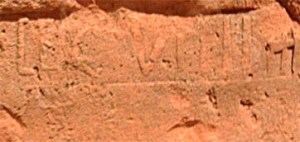
A while back I posted about how VIIII not IX was the ancient way of writing for The Ninth Legion. A recent comment by Duncan Campbell (thank you!) on that post reveals the limits of my knowledge. He writes that to say, as I did, that “The use of IX is a modernism, the Ancient use of the number would have been VIIII” is “not strictly true”.
Fifteen different versions of the Ninth Legion’s tile stamp are known — whenever Roman military units manufactured tiles, they tended to stamp them. Those found in the vicinity of York (Eburacum) were stamped LEG IX HISP, but those found in the vicinity of Carlisle (where there was a major tilery) were stamped LEG VIIII or LEG VIIII H.
The latter version also turns up in the vicinity of Nijmegen in the Netherlands, and is one of the main reasons for our current thinking that the legion was transferred from Britain to the Continent, either by Trajan or by Hadrian.
A tile found in a pottery near Carlisle bears the stamp of the Ninth Legion - LEG VIIII H (for Hispana).
Empireonline writes that “The Eagle (of the Ninth) has landed”, and comments as follows – sadly mis-spelling in the process Rosemary Sutcliff, which has no E!
For a while it looked like The Eagle had vanished like a Roman legionary at a sandal sale, but Kevin Macdonald’s historical adventure is back, back, back with a trailer, release date and, right here for your perusal, a shiny new quad poster. And we’ll say a big “Ave!” to that.
The poster tells you everything you need to know about Macdonald’s adaptation of Rosemary Sutcliffe’s novel. At its heart is young centurion Marcus Aquila (Channing Tatum) who takes his slave Esca (Jamie Bell) across Hadrian’s Wall to recover the lost eagle of the Ninth Legion and finds the locals none too welcoming.
Unlike Centurion which followed the Ninth Legion into Caledonia, The Eagle picks up the story 20 years later. Marcus Aquila, the son of a soldier who disappeared with the legion, must recover the eagle and redeem the honour of the army. Esca (Bell), meanwhile, has to go because he’s a slave and doesn’t look exactly thrilled about it.
Rounding out a strong-looking cast are Mark Strong, Donald Sutherland and A Prophet’s young star Tahir Rahim. Here’s hoping Macdonald’s impressive strike record is maintained when it’s out on March 18.


 ROSEMARY SUTCLIFF (1920-92)