Michael Rosen on children writing and Rosemary Sutcliff writing for children

The wonderful Michael Rosen writes eloquently at his blog  about the limitations imposed upon children (and teachers) by the national curriculum and SATs regime.

If I want to make myself distressed … all I need to do is focus on the kind of writing that English Year 6 children are asked to write, re-write and re-write again and again and again in the run-up to the SATs test. As a body of writing, it represents the removal of all danger, excitement, desire, problem, dilemma, problem-solving or subversion. It is in effect a censorship of the brain.

But even this over-simplifies.Read More »

Does the Arthurian legend hold essential truth for difficult times? | Yes, said Rosemary Sutcliff in 1991

Original Hardback cover Rosemart Sutcliff's Sword at Sunset Arthurian historical novelSome two decades ago, Rosemary Sutcliff, author of best-selling historical novel Sword at Sunset, suggested that :

“The Arthurian legend contains an essential truth, and I think at present we’re awfully uncertain of our future.Therefore we feel a kind of kinship for the Dark Ages; and I think for this reason we feel in a way the need for something to back us up, in the same way as Arthur ‘lights up’ the Dark Ages. We have a need for an archetype of some sort to pull us together, to get us through this, to spread light into the darkness until we can get through to a better world.”

Perhaps true of our times now as much as twenty years ago?  Read More »

Are Rosemary Sutcliff’s books a conscious series? No it just happened

Interesting post today from Anne at the ‘You Write!’ tab (uo at the top) on this site, about the connectedness and origins of Rosemary Sutcliff‘s stories and books of historical fiction.

Readers have often wondered if Rosemary Sutcliff had the whole Aquila family sequence already mapped out when she wrote Eagle of the Ninth, so I thought it might be of interest to note her emphatic reply when asked about this:Read More »

Rosemary Sutcliff’s autobiography Blue Remembered Hills recalls service life

Cover of autobiography Blue Remembered Hills by Rosemary Sutcliff At the start of last year I posted about historical novelist and children’s writer Rosemary Sutcliff‘s autobiography Blue Remembered Hills. I noted that a reviewer on the Amazon site – intriguingly at Leicester University in the town where I write this – wrote a decade ago:  

This is a fascinating book on several levels. First it is the story of a young girl, an only child born in 1920, growing up with middle-class parents, but in a fashion which combined the usual practices and mores of the time with the unusual. As she was crippled (her word) at the age of three, her mother insisted on bringing her up herself rather than delivering her to a nanny, and, due in part to her disabilities, and the long periods of treatment made necessary, she had little formal education. However, she discovered books at an early age, initially through being read to, and was a consummate observer of both people and landscape, particularly on a small scale – the play of light on a dagger blade, the petals of a flower.

Second, it is story of the development of a writer, up to the time her first book was accepted for publication (what a pity she stopped there – I wanted her to go on!)

Third, for me as the child of Service parents (father in the RAF) it is the best representation I have ever seen of the life of the Service child. Rosemary’s father was a naval officer, and she, like me, absorbed unconsciously the traditional values and mores of the British Armed Services while moving every two or three years according to her father’s postings. These values, which have a timelessness about them, in particular the reciprocal loyalties of officer to man and man to officer, the duty of an officer towards his men, come through very clearly in all her fiction. As with all her books, the descriptions are superb (she trained as a miniature painter.

The fourth element, I suppose, relates to the disability and her acceptance of it, in an atmosphere very different from that of today. She says that her mother in particular sought as far as possible to bring her up as a normal child, and so she never really thought of herself as crippled, even though in practical terms she was quite badly disabled. I was lucky enough to correspond with her, and to meet her on one occasion before she died, and I was quite surprised to see how disabled she actually was – she was a person who was incredibly alive.

Sources: I prefer reading: Blue remembered hills – Rosemary Sutcliff and here on Amazon

Penelope Lively made a Dame in New Year’s Honours | Friend and admirer of Rosemary Sutcliff

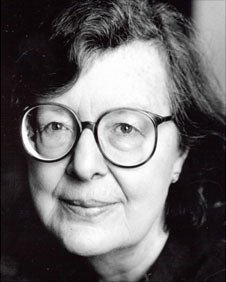
Penelope LivelyCongratulations to author Penelope Lively, who is made a Dame in the New Year’s Honours List. Perhaps best known for her Booker-winning novel Moon Tiger, she was a friend and admirer of Rosemary Sutcliff and gave a eulogy for her at the memorial service in the year of Rosemary’s death which I organised at St James, Piccadilly. After Rosemary’s death, Penelope Lively added to the obituary published in the Independent newspaper:

I first visited Rosemary Sutcliff 20 years ago, writes Penelope Lively (further to the obituary by Julia Eccleshare, 27 July).

We invited ourselves, with diffidence, because the children were devotees, as was I. We sat in her study, she in her wheelchair behind the desk, the rest of us uneasily perched, the children – as they then were – awed into total silence. A housekeeper brought tea on a trolley: cucumber sandwiches and dainty little cakes. Two chihuahuas snarled from a cushion and occasionally shot out to snap at our ankles (on subsequent visits I learned how to deal them a surreptitious kick). It was all dreadfully genteel and strained. I made some comment about the fantail pigeons on the lawn beyond the window. ‘Actually, they’re a nuisance,’ said Rosemary. ‘They crap all over everything.’ And suddenly we all relaxed, the children recovered normal speech, the gentility subsided and we got over the shock that first meeting her must have induced in anyone – the amazement that from that tiny misshapen person, whose whole being seemed subsumed into the enormous, alert eyes, sprang those vivid, intensely physical books. Read More »