Terry Eagleton on close analysis of language | The Oxonian Review

Rosemary Sutcliff’s work was never, to my knowledge, the object of Marxist literary theorist Terry Eagleton’s attention. But books written with her close and careful attention to language deserve the “close reading” and “close analysis of language” of which Eagleton speaks in a recent interview, connected with his new book  Why Marx was Right. (I used to read avidly and closely, without I fear ever wholly understanding, his marvellous primer Literary Theory, from 1983).

I’ve got a book coming out called something banal like How To Study Literature because I fear that literary criticism, at least as I knew it and was taught it, is almost as dead on its feet as clog dancing. That is to say, all of the things that I would have been taught at Cambridge—close analysis of language, responsiveness to literary form, a sense of moral seriousness—all of which could have negative corollaries… I just don’t see that any more.

Somewhere along the line that sensitivity to language which I value enormously got lost. I didn’t really know about this because I had moved up in the echelons of academia and I wasn’t close enough to the undergraduate ground as it were to be aware of this. But when I got to Manchester [Eagleton began teaching at the University of Manchester in 2001], I was appalled by the way that people could be very smart about the context of a poem, but had no idea about how to talk about it as a poem. Whereas even if one did that badly or indifferently, it was still something one automatically did, in my day. This book coming out next year is really an attempt to put literary criticism as I see it back on the agenda. And to talk about questions of things like value, what’s good, what’s bad, form, theme, language, imagery, and so on.

Source: The Oxonian Review | An Interview with Terry Eagleton.

Rosemary Sutcliff: “innately sexist”?

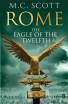
Manda Scott is the author of the Boudica: Dreaming novels and the Rome series. The third book in that series, The Eagle of the Twelfth, was published recently. The History Girls (she is one such) are ‘a group of best-selling, award-winning writers of historical fiction’ with an intriguing blog of the same name. Today they post an interview with Manda Scott, who was questioned first about a title which “inevitably recalls Rosemary Sutcliff’s seminal The Eagle of the Ninth”. “What”, she was asked,”would you say was so unique and inspiring about it – and do you think the current literary love affair with Rome is to some extent part of her legacy?” She replied:
The Roman era, particularly the early empire, is one of those historical time periods, rather like the Tudors, that seems to be perennial in its attraction and I’ve never worked out why. Other periods have strong characters, and surviving dynasties. Other periods had empires that attempted to conquer the world. Other periods have the dichotomy between order (the Empire) and wildness (the unconquered natives of the provinces) and the constant friction between them, but the first century is one of the most deeply and extensively mined periods in fictional history and I have to think that Rosemary Sutcliff has played an overwhelming role in that. Every time I stand on a stage at a book festival or a reading and say that I was inspired by her work, heads nod throughout the audience. When I say the same about Mary Renault or Dorothy Dunnett (the Alexander trilogy and ‘King Hereafter’ respectively) there’s a buzz, but not the same wave of memory and affection.

I’m not sure if it’s simply people of our age, who grew up with The Eagle of the Ninth as our introduction to historical fiction, or whether she genuinely spans the generations, but there’s no doubt that she’s had a huge impact.

Defining exactly why she’s had that impact, is harder than knowing that it exists. Partly, she was the only one: nobody else brought the legions to life as she did, nobody else asked the questions of our identity before the Roman occupation. (She never answered them, at least not for me: trying to find out what the Seal People were doing when the Romans weren’t looking has occupied a large part of my spiritual and writing life and the Boudica series is a direct result of that). She had the capacity to engage men and women, girls and boys across the genders, which was one part of her charm: nobody has ever suggested to me that she lost readers because they knew she was a woman: her writing was too strong for that. And she was an imperialist at heart, a girl brought up in the dying days of the Empire by a father who was a Naval Officer, her writing fuses that same effortless superiority and innate sexism that propelled Enid Blyton to such massive success: there’s a level at which it resonates with the part of us that wants security; now as much as then. Her world was ordered. Her Romans were benevolent, if strict. Her natives were noble savages, but they respected their Roman over-lords.

I don’t think that was how it was, but it’s a very safe kind of fiction (and just because I think it’s factually inaccurate doesn’t stop me from regarding her as a master of her art and the progenitor of everything I’ve done.)So either Sutcliff made Rome the attraction that it is, or it’s a hangover from our Imperial past, when the Victorians rediscovered Rome and used it as a fictitious model for their own dreams of empire: the entire ‘white man’s burden and the Pax Britannia’ are modelled on Augustus’ concepts of the Roman Empire – Either way, there’s nowhere near the same kind of interest in the US, for instance, or other European nations. Our love of Rome is uniquely British and, in the same way that it’s possible to divide all those around us into natural Roundheads or natural Cavaliers, so are we all natural Romans or natural Britons. It’s part of our native psyche.

Actually, although I agree with some of her analysis, I am not sure I concur entirely  with this take on Rosemary Sutcliff. I would certainly have wished to hear Rosemary’s own response. For example: she would, I believe, have resisted being labelled and (pace, Marshall McLuhan) libelled “innately sexist” whilst being determinedly not a feminist.  She would have rejected the assertion that what “propelled her to success” was what she had in common with Enid Blyton (whose work she was not a fan of!). She did not consider the “natives” of Britain “nobel savages”.

Exploring the realm of virtual experience with Rosemary Sutcliff

The sharing of storytelling that writers do with readers is the dialogue of imagination. Rosemary Sutcliff lives, grows and acts and suffers in her stories. The worlds created in her imagination have had to stand in for the world of much everyday actuality. From her therefore we can learn what the imagination does, and how it allows us all to explore what’s possible, the realm of virtual experience.

In Rosemary Sutcliff’s world, heroes, heroines and readers alike walk a head taller than usual, as heroic warriors, to confront, like Drem in Warrior Scarlet, fearsome events as rites of passage and thus discover what is worth striving for. Readers have to expect to be spellbound in the tradition of storytelling that’s much older than reading and writing, when before the days of written records bards and minstrels were entrusted with the memory of a tribe. Rosemary Sutcliff is in this tradition; she says of herself that she’s `of the minstrel kind’. This in itself sets her apart from some of the more, apparently, throwaway casualness of some contemporary writing. In these days, when we’ve learned to look closely at the constructedness of narratives, she will still say that she knows when a story is `in’ her and `waiting to be told’.

Source: Margaret Meek in Books for Keeps No 64

To read Rosemary Sutcliff is to discover what reading is good for

… The Shining Compan(1990) … (is)  a vintage volume, the work of a writer who has a distinctive view of her readers, a view which many may not know that they can have of themselves. To read Rosemary Sutcliff is to discover what reading is good for.

…. this accomplishment make me ask what might be the contemporary appeal or, more simply, the enduring attraction of the historical novels for the young. After all, much has clearly changed in children’s books and reading since television became their more immediate storyteller, and novelists, now more matey and informal, adopted a more elliptical vernacular prose, in which the readers’ ease is more visible than the challenge to read.But, given her isolation, Rosemary Sutcliff needs her readers. Like her characters they people her world, so she devises means of coming close to them and drawing them into the worlds she makes out of the dark places in history.

Sometimes the trick is a first-person narrative: `I am – I was – Prosper, second son to Gerontius, lord of three cantrefs between Nant Ffrancon and the sea.’ Or there’s a dedication, `For all four houses of Hilsea Modern Girls’ School, Portsmouth (my school) who adopted me like a battleship or a regimental goat.’ The first page swings the characters into action in a situation as clear as a television image. The names of the people and places set the rules of belonging; the relations between the sexes are formally arrayed; the battles are long and fierce. Readers who are unaccustomed to the building up of suspense in poised sentences may need a helping hand. Again, the best way into a Sutcliff narrative, a kind of initiation, is to hear it read aloud. Then you know what the author means when she says she tells her tales `from the inside’.

Source: Margaret Meek in Books for Keeps, Issue 64Reproduced with permission.

Rosemary Sutcliff’s Warrior Scarlet is My Favourite Book | Australian author Nansi Kunze

Rosemary Sutcliff's Warrior Scarlet hardback coverAustralian writer Nansi Kunze wrote at Michael Pryor’s blog about her “favourite book”, Rosemary Sutcliff’s Warrior Scarlet. The author of Dangerously Placed (‘Can a hippy chick, a goth girl in a lab coat and two guys with a taste for blowing things up really help solve the mystery – before Alex becomes the next victim?’) and Mishaps (‘Why does Pen’s name strike terror into the heart of pop princess Sereena? And just how far will Pen go to get what she deserves?’), grew up in both Australia and the UK.

I think I must have been ten when I began to read Rosemary Sutcliff’s books. It was a strange time for me – a confusing and somewhat lonely one. My parents had split up, and we had gone back to England, leaving my friends, my school and the various treasures a ten-year-old deems precious behind in Australia. Read More »