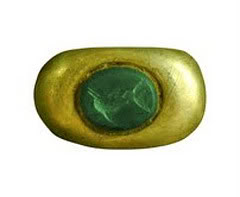
A Dolphin Ring belonging to the Aquila family provides a thread through several of the historical fiction novels of Rosemary Sutcliff

4175450143_5ea02eb09c_m

“Marcus took it from him and bent to examine it. It was a heavy signet-ring; and on the flawed emerald which formed the bezel was engraved the dolphin badge of his own family …” (The Eagle of the Ninth)

The Eagle of the Ninth was first published in 1954. Various books are linked by this Dolphin ring of the Aquila family. In TThe Silver Branch from 1957  Flavius, a descendent of Marcus, and his kinsman Justin lead a resistance movement to the Saxon attacks on Britain.Then in Frontier Wolfpublished in 1980,  Alexios (“a scion of Marcus’ blood”) leads the Frontier Wolves who manned an outpost in the far north of Roman Britain. The much earlier (1959) The Lantern Bearers was also set in Roman Britain, during the coming of Anglo-Saxon invaders. The nineteen-year-old Aquila (again, a descendant of Marcus) sees his home and family destroyed by Anglo-Saxon invaders and becomes a slave, before escaping to join the free men in Wales where he meets a young leader Artos the Bear (Rosemary Sutcliff’s interpretation of King Arthur). Sword At Sunset (1963) follows the story of Artos the Bear.

In Dawn Wind, published in 1961, Owain is fourteen when the British war-hosts gather to hold what territory they still had against the Saxons. He hopes that one day ‘the dawn wind might blow and some part of the Britain he had known might be restored.’ Owain too is descended from Marcus. The Dolphin ring turns up again in Sword Song (1991), and finally in The Shield Ring (1956) a group of Vikings, including Beorn – last descendent of the Marcus line, though now with Norse blood, lives in the Fells of Lakeland, trying to hold out against the resources of Norman England.

In summary, chronologically:

The Eagle of the Ninth (1954) – 2nd century
The Silver Branch (1957) – 3rd century
Frontier Wolf (1980) – 4th century
The Lantern Bearers (1959) – 5th century
Sword At Sunset (1963) – 5th century
Dawn Wind (1961) – 6th century
Sword Song (1997) – 10th century
The Shield Ring (1956) – 11th century
“Angharad wore around her neck a heavy golden ring, much battered and set with some dark green stone……(with a dolphin)  engraved on it” (Sword Song)
2016 schooling: Slowly, slowly, without respite, successive governments are stealing childhood

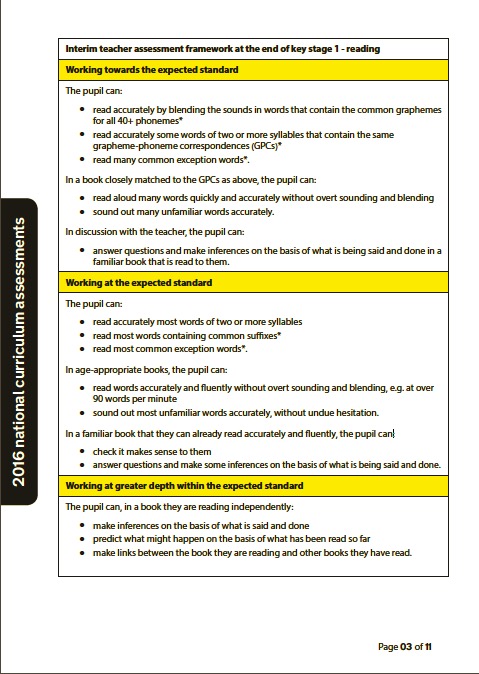
A good friend teaches new teachers in England. She was herself a distinuguished, imaginative teacher for many years. In response to a post on Facebook that I made about the impenetrable language of the new and ever-more restrictive framework for the assessment of children in primary schools, she posted some deeply depressing comments about the state of schooling now. It is a state which Rosemary Sutcliff, a story-teller par excellence, would deplore. Unable to understand some of the expected standards, I had asked if I should return to primary school. She posted:

Under no circumstance return to primary school, unless it is to tell stories, read stories, share songs and poems, listen to what children have to say, share books and the pleasure of reading, write together and enjoy each other’s writing. Slowly, slowly, without respite, successive governments are stealing childhood, ignoring any sensible understanding of language or of culture or, indeed, of what it might be to be human. I feel overwhelmed by the great crimes that are being committed against children.

Our students make a close analysis of one child’s language use and learning in reading, writing, speaking and listening. Each successive year, the crimes are greater. Fewer children are given space to write and understand what writing might be, even fewer children understand the pleasures of reading though they can decode with fluency.

One thing that we are doing here is to run teachers’ writing groups and here change and growth and great pleasure can occur.

Screenshot 2016-01-16 09.26.14

Celebrating the 100th anniversary of Rosemary Sutcliff’s birth in 1920

Dear Lovers of Rosemary Sutcliff
I am beginning to think ahead to 2020, the 100th anniversary of Rosemary Sutcliff’s birth in 1920.
Do you have ideas about how the centenary might be publicised and celebrated and used to good effect?
Anthony Lawton

Rosemary Sutcliff’s rocking-horse Troubador