Can mizzle be a noun as well as a verb? | Twitter debate!

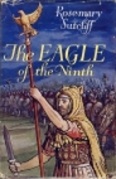
As highlighted by Charlotte Higgins in the Guardian last year, Rosemary Sutcliff once wrote  in her great historical novel and classic of children’s literature The Eagle of the Ninth about a ‘ battle fought through the grey drizzle of a west country dawn (which) is illuminated by “firebrands that gilded the falling mizzle and flashed on the blade of sword and heron-tufted war spear” ‘. I drew attention to this article once again with a post last week. Someone tweeted in response that they were surprised to come across ‘mizzle’ as a noun. Hence this set of tweets  in the  last 24 hours (read from the bottom):

On Mizzle in Rosemary Sutcliff's writing

Rosemary Sutcliff had the eye of a painter of miniatures

Rosemary Sutcliff crafted her historical novel The Eagle of the Ninth from two starting points: a small bronze eagle found at Silchester, which is now in Reading Museum; and the unknown fate of the Roman Ninth Legion, which, based in York, had apparently vanished from the historical record in the early years of the 2nd century. Written, as always, “for children aged 8 to 88” The Eagle of the Ninth is about a young centurion, Marcus Aquila, who takes up his first command on the edges of the Roman empire in south-west Britain. Severely injured during a fight with local warriors who have been inflamed by a travelling druid, he has to give up his military career. However, he  hears rumours of sightings of  the standard of his father’s lost legion – the eagle of the ninth –  north of Hadrian’s wall. He realises that if he can find it, he will restore the honour of his disgraced father and the legion he commanded.

Last year, at the time of the release of the film The Eagle, Charlotte Higgins, chief arts writer of The Guardian newspaper, wrote a long, affectionate article about her children’s favourite.

… In an interview in 1992, the year she died, she said: “I don’t write for adults, I don’t write for children. I don’t write for the outside world at all. Basically, I write for some small, inquiring thing in myself.” I have read The Eagle of the Ninth dozens of times; and as the reading self changes, so does the book. When I last read the story, it was the quality of the prose that delighted, the rightness with which Sutcliff gives life to physical sensation. A battle fought through the grey drizzle of a west country dawn is illuminated by “firebrands that gilded the falling mizzle and flashed on the blade of sword and heron-tufted war spear”. Read More »

The New York Public Library recommends historical fiction by Rosemary Sutcliff

Regular commenter on this blog about historical fiction and children’s literature great, Rosemary Sutcliff, Anne finds it “a pleasant surprise to see Rosemary Sutcliff’s novels recommended as cool teenage reads in the New York Public Library’s Stuff For the Teen Age blog”. (Thank you, Anne, for pointing to this at the You Write! tab and page). It starts:

Who says that all historical fiction is dull and boring? If done correctly, historical fiction is not dull at all. It’s time travel in a book. Who hasn’t imagined being transported back through time to experience what life was like during a different period in history? I particularly love reading stories that are completely out of my realm of knowledge and experience and have a sense of the romantic about it—novels about war, warriors and (ahem) gladiators tend to fit that bill.

One of the more well known authors of this type of historical fiction is Rosemary Sutcliff, a British author who primarily wrote stories set during Roman-occupied Britain circa 1st-5th centuries. Despite being set almost 2000 years ago, her books are still filled with ideas that we can all relate to today: belonging, honor, family, loyalty and pride. More interesting for us, her books are also filled with plenty of bloody battles, dirty fights, searing betrayal and love.

Source: Historical Fiction Part 1: Gladiators, Roman Soldiers and Slaves | The New York Public Library

Rosemary Sutcliff’s The Eagle of the Ninth | Echoes of Tolkien and Robert E Howard? | From the Black Gate blog

The Eagle of the Ninth lives in its atmosphere. Sutcliff powerfully catches both everyday Roman life and the beauty of ancient Britain. Her use of detail is effective, and her descriptive prose is powerful and suggestive. Reading the book, I was caught again and again by glinting moments of terrible beauty; by her ability to conjure up vistas of ruined fortresses and mist-covered landscapes. At different times, and for different reasons, I found myself thinking of first Tolkien, and then, oddly, Robert E. Howard.

Source: Black Gate | Blog Archive | Some Notes on The Eagle of the Ninth.

The Eagle of the Ninth | Rosemary Sutcliff | Library of Libation review

David Urbach (a ‘liker’ over at Rosemary Sutcliff’s Facebook page  – do join him and click the like button there!) alerted me to a 10/10 review by someone he considers “perceptive”,  of Rosemary Sutcliff‘s classic of historical fiction and children’s literature, The Eagle of the Ninth. It makes interesting reading, and I am intrigued to learn of the reaction of others who know Rosemary’s work well.  Read More »