Close

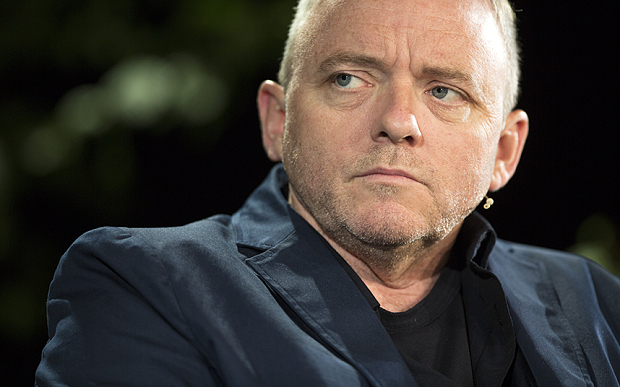
Rules for being a successful writer, from US author of Mystic River, Dennis Lehane

Photo of Dennis Lehane, US writer of Mystic River Dennis Lehane, author of Mystic River and writer for hit TV show The Wire, has told the ever popular Hay Festival in the Wales in May 2015 how he went from a working-class life in Boston (USA) to literary acclaim. His comments were reproduced in The Telegraph (10 rules for making it as a writer). His prescriptions include the instruction to ‘read whatever you can lay your hands on’ and develop ‘an ear for dialogue’; and advice that the approval of your parents is not ‘that important’!

Read whatever you can lay your hands on We were working class. There were no books. There were some encyclopaedias – I always say it was the day my father didn’t see the salesman coming. And there was a Bible. I read the Bible from cover to cover when I was a kid. The Bible is an amazing piece of narrative storytelling. Then my mother heard from the nuns – probably the only nice thing a nun ever said about me – that I liked to read. So my mother took me to the library. To this day, I’m a big benefactor of libraries. Without libraries I couldn’t be sitting here.

Have an ear for dialogue Where I grew up, everybody knew how to italicise. People knew how to hit just the right word in a sentence. I was living in Miami and felt I was losing the voice of Boston. I went back home and ran into a friend of mine. I said, ‘How are you doing?’ and he said, ‘I’m good but actually I got stabbed. And I don’t know what you’ve heard, but getting stabbed can kinda take the fight out of a guy.’ ‘I don’t know what you’ve heard’ – as if you might be under the impression that getting stabbed is like a hot rock massage – and then the gross understatement of ‘it kinda takes the fight out of you’. Not, ‘I was praying to my God’ or ‘My intestines were on fire’.”

Parental approval isn’t that important My old man slept through all of my three movie adaptations. He slept through Mystic River, got up at the end and said, ‘Oh, your mother said that one was dark.’ He slept through Gone Baby Gone and said, ‘Oh, your mother said you used the f-word too much in that one.’ And then with Shutter Island he said, ‘Your mother didn’t know what the hell to make of that one.’ He never read any of my books and everybody said that was so sad. What my father would have said to that is, ‘Your brother works in a prison but you don’t see me going there.’

13 Answers from the great Rosemary Sutcliff, author of 60 books of historical fiction and children’s literature

Rosemary Sutcliff was an internationally acclaimed British writer for children, one of the best of the 20th century. Romey (as I knew her) is not around to answer those sets of questions sent by magazines for brief celebrity profiles; she dies in 1992. Some answers to imagined questions can be deduced from Rosemary Sutcliff’s own words in her 1983 session on BBC Radio’s ‘Desert Island Discs‘. Where were you born?

To my shame I have to admit that I was born in Surrey, but  I count myself as a West Country woman, as a Devonshire woman.

You were very ill as a child; what happened?

I contracted juvenile arthritis. A spinal carriage was rather like a coffin; it was very uncomfortable, and you lay flat out in this thing, and of course all you could see were the branches of the trees or the roofs of the houses going by overhead. And it was extremely boring. With any luck you were perhaps allowed to sit up on the way home from a walk.

Read More »

Poetry Party 2015 Manifesto—Neglected in UK General Election 2015 | Recommended reading for @UKLabour leader contest

Poetry Party Manifesto 2015

Source: Brian Bilston on Twitter

22 May | Athur Conan Doyle’s Birthday

Arthur Conan Doyle Birthday Quote

Is Rosemary Sutcliff’s ‘rattling good yarn’ The Eagle of the Ninth, of 21st Century geopolitical significance?

Buttonwood’s Notebook at the Economist, on The Eagle of the NinthThere was an intriguing post late last year (2014) at The Economist’s Buttonwood Blog about Rosemary Sutcliff’s The Eagle of the Ninth.

… Our leaders make promises to get elected but cannot fulfil them because of forces outside their control; this adds to voter cynicism.

 … (For example) the hard power of military force. In recent weeks, we have seen Western governments struggle to come up with a strategy to contain ISIS, and forced to watch helplessly as hostages are beheaded. A decade of intervention (and billions of spending) leave Iraq and Afghanistan no more stable than before; Libya is less stable; there are regular atrocities in Nigeria; and so on.

The hard power of the West means that few countries would be foolish enough to put an army or navy into the field against it. But they don’t need to do that to cause massive disruption; the West is vulnerable at a million points because of its open model and worldwide network.

The example that springs to mind …  is The Eagle of the Ninth, a rattling good yarn by Rosemary Sutcliff based on the story of the Roman ninth legion which (on some accounts) vanished in the wilds of Scotland. In the book and film (The Eagle), the soldiers are swallowed up in the mists, and picked off by local tribes. …

In other words, conquest of territory is one thing; holding that territory is quite another, in the face of the hostility of the local population. Perhaps the only “successful” approach is the ruthlessness of Genghis Khan—wiping out or enslaving the men and women—and that is rightly not an option.

So does all this matter to the global economy, or are the markets right to shrug their shoulders, and treat terrorism and rebellions as background noise? I think it does matter for a couple of reasons. For a start, economic globalisation depends on the different power blocs agreeing to co-operate in order to smooth the flow of trade and investment. But the example of Russia and Ukraine shows that co-operation can break down and Japan/China tensions may cause something similar.

Secondly, this powerlessness adds to voter dissatisfaction. I’ve dubbed this the “Starbucks problem” —people get their coffee exactly the way they want it, with soy milk, wet or dry etc—and they expect politics to be the same way. But you could also dub this the Hollywood problem. We are used to seeing Spiderman or Bruce Willis save the day and the enemies being soundly defeated. But real life is not like that.

Our elected leaders are dogged by Monday-morning quarterbacking as pundits and rivals declare that if only they had been tougher (or only if they had not been involved in the first place) said disaster would not have happened. If only we had bombed Syria in 2013, things would be better—maybe, but maybe ISIS would now be in charge in Damascus. Again, this voter dis-satisfaction may lead to electoral success for those who have simplistic solutions (blame the foreigners, blame the minorities at home) and this will only make matters worse. And then the markets will really have something to worry about.

Back to top