Chosen with a poet’s care | The names of Rosemary Sutcliff’s characters | Placidus, Allectus, Evicatos, Tradui

Cover of Margaret Meek's monograph on historical and children’s novelist Rosemary SutcliffAround 1962 Margaret Meek wrote a monograph about Rosemary Sutcliff, only a decade or so into a writing career that was to last for another 30 years.  She spoke of Rosemary choosing names “with a poet’s care”:

Rosemary Sutcliff’s magic has certain recognizable elements; the names of the characters are chosen with a poet’s care, the dogs have a central place and are characterized with the loving attention children recognize and approve. The villains, such as Placidus in The Eagle of the Ninth and Allectus in The Silver Branch are acidly etched, although there is more reliance on traditional enmity and feud than on personal evil to provide the dark side. Episodic characters, singly or in groups, have a miniaturist’s clarity of outline. Pandarus, the gladiator with his rose in the battle, Galerius the surgeon, the garrulous household slaves, soldiers at a firelit cockfight or warriors at a feast, all are equally memorable.

Others more involved in the developing action, commanding officers, wise men of the tribes, outcasts, especially Guern the Hunter, Evicatos of the Spear and Brother Ninnias, have a legendary quality. Tradui the Chieftain at the making of New Spears, Bruni, dressed in the war gear of a Jutish hero dying as the wild geese fly south, blind Flavian, killed at the hands of marauding Saxons, all carry a dignity and heroism that link this series of tales with the legends Miss Sutcliff loves to tell. Indeed, part of the difficulty in evaluating the achievement of these books comes from the thickly woven texture which is as closely wrought as in many adult novels of quality.

  • Source: Margaret Meek (1962). Rosemary Sutcliff. New York: Henry Z. Walck
  • list of most main characters in Rosemary Sutcliff’s novels. re-tellings and books

(First posted 30 March, 2010; revised,  24 March, 2014)
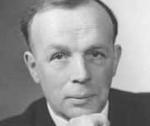
Rosemary Sutcliff followed in Geoffrey Trease’s writing footsteps in the 1950s, but not his political footprints

That Rosemary Sutcliff followed in the footsteps of children’s writer Geoffrey Trease was the accurate claim of an intriguing article a couple of years ago in The Morning Star (the link I had does not now work, but I have found the article— below —on Wayback Machine). I was moved to write to the editor:

Although you carry a fascinating article yesterday (February 25, 2010) by Farah Mendlesohn about Geoffrey Trease, may I correct a couple of errors of fact? If Rosemary Sutcliff (sic) did indeed “follow” in “Trease’s footsteps”, she started following in the 1950s not the 1960s as stated, with her award-winning Lantern Bearers and The Eagle of the Ninth which were both published in that earlier decade.

Furthermore, in all decades her name was spelled without the ‘E’ … As to the detail about Trease, whilst not a matter of fact, I think it interesting that in one respect Rosemary Sutcliff certainly did not follow in his footsteps. I grew up listening to her, as a close relative. I heard how much she treasured Trease’s work, but I do not think that she shared the political leanings that the article explores.

The man who told the people’s stories

Falco creator Lindsey Davis included Rosemary Sutcliff’s The Eagle of the Ninth in her top ten Roman books

In 2009, Lindsey Davis—writer of classical thrillers, creator of private investigator and poet Falco—listed in The Guardian newspaper her top ten books from her “shelves and shelves” of Roman material. She included Rosemary Sutcliff in “ten that are scholarly but user-friendly …  all books I have enjoyed, all influenced my love of ancient Rome and most of them are in regular use for my work”.

Of The Eagle of the Ninth, by Rosemary Sutcliff, she wrote:

Somewhere about the year 117 AD, the Ninth Legion, which was stationed at Eboracum, where York now stands, marched north to deal with a rising among the Caledonian tribes, and was never heard of again. Hooked? If not, there’s no hope for you. A wonderful novel, for children of all ages.

With excerpts from her remarks, her other nine choices were: Read More »

Rosemary Sutcliff on her schooling, painting and writing

My schooling began late, owing to a childhood illness, and ended when I was only fourteen, owing to my entire lack of interest in being educated. But I showed signs of being able to paint, and so from school I went to art school, trained hard, and eventually became a professional miniature painter.

I did not start to write until the end of the War, but now I have switched completely from one medium to the other, and it is several years since I last touched paint.

Source: Rosemary Sutcliff’s monograph on Rudyard Kipling.