Rosemary Sutcliff’s ancient Olympics | 1972 not 2012

It was early in the day but already it was growing hot; the white dry heat of the Greek summer; and the faint off-shore wind that made it bearable had begun to feather the water, breaking and blurring the reflections of the galleys lying at anchor in Piraeus harbour.

Half Athens, it seemed, had crowded down the to the port to watch the Paralos, the State Galley, sail for the Isthmus, taking their finest athletes on the first stage of their journey to the Olympics.

Every fourth summer it happened; every fourth summer for three hundred years. Nothing was allowed to stand in the way, earthquake or pestilence or even war – even the long and weary war which, after a while of uneasy peace, had broken out again last year between Athens and Sparta

Writer for children and (young) adults, Rosemary Sutcliff,  published in 1971 The Truce of the Games which was her short story for children about the Olympics. Two athletes from different ways of life and backgrounds discover the meaning of friendship as they compete against each other in the ancient Olympic games. With a changed title –  A Crown of Wild Olive  – this story was collected with two others – The Chief”s Daughter, and A Circlet of Oak Leaves –  into Heather, Oak, and Olive  (1972).

Reviewing the three stories, reader Joy on GoodReads said:

For fans of historical fiction, Rosemary Sutcliff ranks among the divine. Her prose is easy and fluid, and these three short stories, hard to find, are beautifully written and worth tracking down. This is the second book of Sutcliff‘s that I read, after I fell head over heels for her remarkable re-telling of Tristan and Iseult. A great book for those interested in ancient Britain, the Roman occupation of those islands, or anyone who delights in a well-told story set in the past.
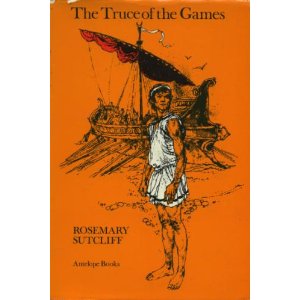
Cover of The Truce of the Games by Rosemary Sutcliff (Antelope Books)Cover of Heather, Oak and Olive (1972) by Rosemary Sutcliff

The frontispiece of Rosemary Sutcliff’s personal copy of her own book has her distinctive dolphin signature.
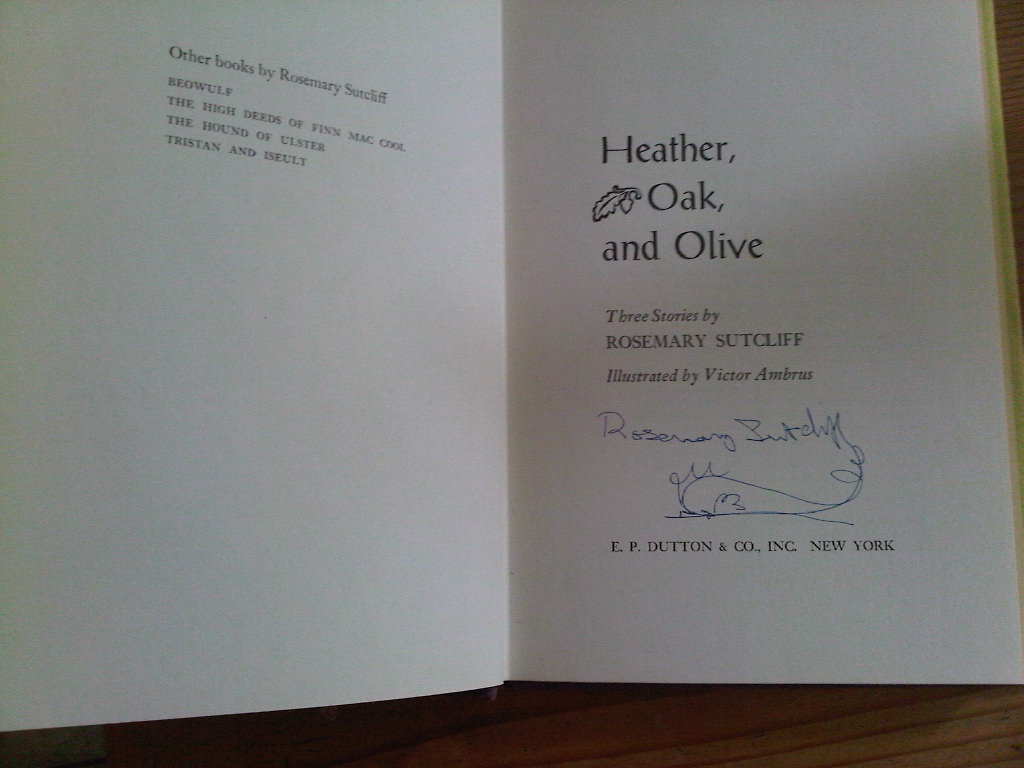
Author Rosemary Sutcliff's personal copy of the Heather, Oak and Olive.

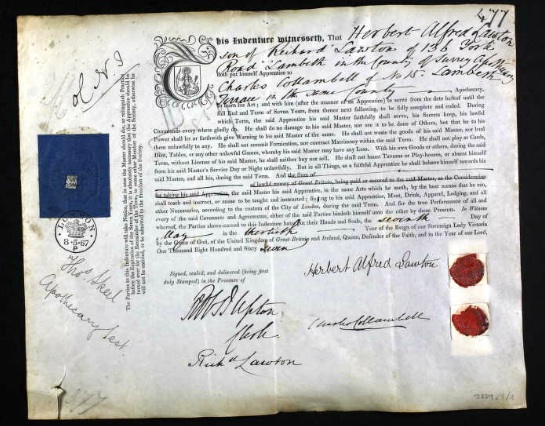
Rosemary Sutcliff’s grandfather apprenticed and qualified as an Apothecary in the 1800s

Today’s diary entry by  author Rosemary Sutcliff refers to her mother. Coincidentally, I have today come across a copy of the original document which records the indenture as an apprentice apothecary of Rosemary Sutcliff’s grandfather (and my great grand-father), Dr Herbert Alfred Lawton (born 1851, died 1903).

Midsummer Eve and just what Midsummer’s Eve ought to be but seldom is … (Rosemary Sutcliff Diary, 23/6/88)

June 23rd June. Midsummer Eve and just what Midsummer’s Eve ought to be but seldom is. Also Mummie’s birthday. J looked in today with a manuscript she wants me to look at. There’s another blackbird’s nest in the front garden, in place of the one the ginger cat took.

‘Mummie’, Rosemary’s mother of course, was my great Aunt, Nessie Elizabeth Lawton, who was born in 23rd June in 1885, in Poole Dorset. (She died in 1955). She married George Ernest Sutcliff, who I knew as ‘Uncle George’ when I was a young boy, on 14th September 1910, in Longleet in Dorset. The driver-handymen (like Ray in recent weeks of this diary) were employed by Rosemary after her father died in 1966: he used to look after the garden – and her – at the house in Walberton where all the events recorded in this 1988 diary take place.

Nice peaceful day with no visitors … (Rosemary Sutcliff Diary, 22/6/88)

June 22 Wednesday.  Nice peaceful day with no visitors. Ray had his girlfriend to lunch.

Rosemary Sutcliff never turned visitors away, but as previous diary entries have suggested, they could have a major impact on her writing. So peaceful days were very welcome. An entry like this implies that, provided Rosemary was not feeling “muzzy headed”, she would have enjoyed being free to immerse herself in her writing. Visitors were a two-edged sword.