For award-winning, internationally-acclaimed author Rosemary Sutcliff (1920-92). By Anthony Lawton: godson, cousin & literary executor. Rosemary Sutcliff wrote historical fiction, children's literature and books, films, TV & radio, including The Eagle of the Ninth, Sword at Sunset, Song for a Dark Queen, The Mark of the Horse Lord, The Silver Branch, The Lantern Bearers, Dawn Wind, Blue Remembered Hills.
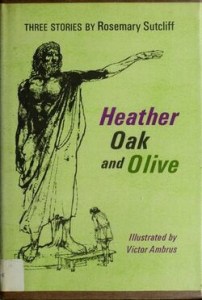
A Crown of Wild Olive was the title given to the Rosemary Sutcliff story The Truce of the Games (1971) when it was re-published in 1972 in the USA in an omnibus collection of stories, Heather, Oak and Olive. That collection also included The Chief’s Daughter and A Circlet of Oak Leaves.
It had never seemed of much importance during their boyhood that Simon Carey was for Parliament and his friend Amias Hannaford a Royalist. But when the Civi War between the two parties broke out, and two years later they were old enough to take part in it, they found themselves fighting for different sides.
This story tells of the last stages of the Civil War waged in the west country; and the account of the part played by Simon in the fighting makes exciting reading. Several times in the course of it he encounters Amias ; and these meetings leave him torn by conflicting loyalties. Finally the day comes when he is forced to put the strength of the friendship to the test, weighing it against his loyalty to the Parliamentarian cause.
Rosemary Sutcliff has written a compelling and unbiased story of the troubled times of the civil war, describing vividly and accurately the final campaign in the west and sharing the life and thoughts and feelings of some of the people who became involved in it.
“Here is an author who writes with great distinction…Simon is a book that I recommend with all my heart” – Noel Streatfield
Stone Age: Shifting Sands (1977)
Bronze Age: The Chief’s Daughter (1967)
Bronze Age: “Flowering Dagger” (1977, in The Real Thing)
Iron Age: The Changeling (1974)
412 BCE: “A Crown of Wild Olive” (1971, originally The Truce of the Games)
60 CE: The Capricorn Bracelet (1973, collection)
80 CE: Eagle’s Egg (1981)
130 CE: “Swallows in the Spring” (1970, in Galaxy)
150 CE: A Circlet of Oak Leaves (1965)
Roman: The Bridge-Builders (1959)
Roman: “The Fugitives” (1964, in Another Six)
Rosemary Sutcliff grew up was seriously affected by juvenile arthritis from a very young age. She was not at school and unable to read until aged about ten years, but she was read to ceaselessly by her mother, including Grimm’s Fairy-Tales – a copy of which was in her library.
Allegedly Albert Einstein, the physicist behind the Theory of General Relativity and other crucial theoretical advances of the 20th century, once said: “If you want your children to be intelligent, read them fairy tales. If you want them to be more intelligent, read them more fairy tales.” Mind you that he said it might be a fairy-tale itself: https://blogs.loc.gov/folklife/2013/12/einsteins-folklore .
“Critics of Rosemary Sutcliff’s work sometimes comment on its difficulty both in terms of the language she employs and in terms of the historical depth her novels embrace.” But Romey (as I knew her, a close family member) welcomed as compliments these sorts of evaluations of her writing.
“She prided herself on never writing down to her readers, expecting them instead to be enticed into enjoying a compelling and demanding tale by the pageantry of history and the warm humanity of people in every era.”
“She carefully creates dialogue in her novels that recollects the speech of a bygone era without falling into what she termed ‘gadzookery.’ Sutcliff also researched her novels with exquisite care, and they reflect her vast knowledge of military tactics, religious practices, landscapes, and the material conditions and artifacts of everyday life whether in a Bronze Age village or in a Roman legion on the move.”
“Other commentators have noted the limited role that female characters play in her novels. Except for a few volumes that focus on a young woman, like Song for a Dark Queen (1978), which tells the tale of Boudicca, the queen of the Iceni who led a revolt against the Romans in a.d. 60, this is certainly true. Sutcliff often includes energetic and courageous women among her secondary characters, but providing insights into women’s roles in history is not among her greatest strengths.”
Extracts from Oxford Encyclopaedia of Children’s Literature on Rosemary Sutcliff.


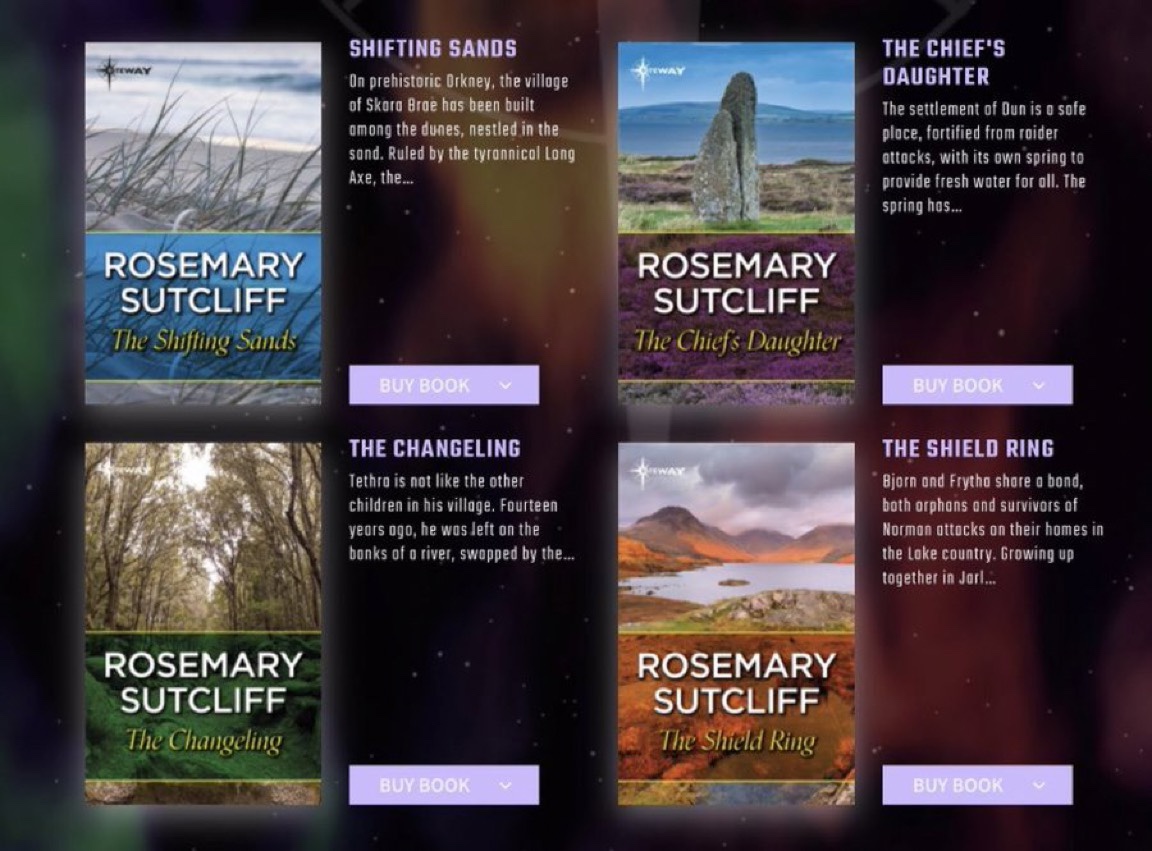 These are brief stories of historical fiction by Rosemary Sutcliff in shorter form, most of them originally published as book

 ROSEMARY SUTCLIFF (1920-92)