I have just come across this reproduction of a french film poster: note how the French sensibly called the film The Eagle of the Ninth (in French!). They knew something that the US marketers did not!

Source: Facebook pages of Channing Tatum

I have just come across this reproduction of a french film poster: note how the French sensibly called the film The Eagle of the Ninth (in French!). They knew something that the US marketers did not!
Source: Facebook pages of Channing Tatum
The flurry of attention to The Carnegie Medal has set me re-reading all manner of more extensive pieces on Rosemary Sutcliff’s writing. One such was posted at the extensive historicalnovels.info site whose writer ‘Annis” decided some while back to revisit Rosemary Sutcliff’s “work as an adult and consider what it was about this remarkable woman that enabled her to inspire so many children with an enduring love of history, heroic fantasy, mythology and legend.”.
Ask any baby-boomer who loves historical fiction what inspired their appreciation, and chances are the reply will be, “Well, when I was a kid I read Rosemary Sutcliff’s books”. Out of print for years, Sutcliff’s novels are making a comeback as their original readers reach an age when they can influence the reissue of old favourites.
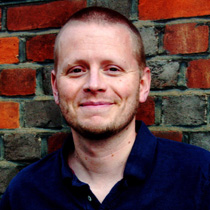 The Carnegie Medal for 2011 (won by Rosemary Sutcliff in 1959, see previous post!) has been presented to Patrick Ness for his book Monsters of Men, the final volume of the Chaos Walking trilogy. In his acceptance speech, according to The Guardian, he launched a “scorching” attack on the (UK) coalition government’s policy on libraries – a policy which results in many many closures.
His first two novels, The Knife of Never Letting Go and The Ask and the Answer, were runners-up for the Carnegie Medal in 2009 and 2010. The Knife of Never Letting go won both the Guardian Children’s Book Award and the Book Trust Teenage Award.
The chair of the 2011 Carnegie judging panel praised Ness for creating a “complex other world, giving himself and the reader great scope to consider big questions about life, love and how we communicate, as well as the horrors of war, and the good and evil that mankind is capable of.” I am not sure who the chair of judges was, but possibly not a writer?! Patrick Ness, however, clearly is. An American, one time writer for a big corporation, he has lived in the U.K. since 1999. I have not read anything he has written – yet – I am afraid. Any readers of this blog have any experience and views?
Addendum: Since I posted this I have read that the book Monsters of Men that had begun as a fragment and an idea written by Siobhan Dowd, who died of breast cancer before the novel was finished (and who won the 2009 Carnegie Medal posthumously for Bog Child). See tis Q&A with Patrick Ness and Denise Johnstone-Burt.
Rosemary Sutcliff won the Carnegie Medal for The Lantern Bearers in 1959, and was runner-up in 1972 for Tristan and Iseult – and its most recent winner is announced today. The Medal is perhaps the UK’s most prestigious award for writing for children, the longest standing certainly, awarded every year in the UK to the writer of an outstanding book for children. The Library Association started the prize in 1936, in memory of the Scottish-born philanthropist Andrew Carnegie (1835-1919), a great supporter of reading and libraries.
First awarded to Arthur Ransome for Pigeon Post, the medal is now awarded by the Chartered Institute of Library and Information Professionals. The winner receives a golden medal and some £500 worth of books to donate to a library of their choice.
Rosemary Sutcliff also:
One of you regular readers – but I cannot find who at the moment, sorry – commented a while back pointing me to the fact that Rosemary Sutcliff’s story of the ninth legion, The Eagle of the Ninth, was the jumping off point for a column in The Church Times earlier this year by Simon Parke (sic!), entitled ‘The Mystery of the Ninth’. He concluded:
It was the Ninth ..the most exposed and northerly of all legions in Britain, that bore the brunt of the unrest. But where and why did they cease to exist? After York, the archaeological trail of this elite force of soldiers grows strangely cold. Sometimes mystery is more gripping than fact, and loss more wondering than gain.
The full column is reproduced, with permission from the writer, below. It sets out broadly one version of the case for and against Rosemary’s ‘imagined’ version of events.Read More »
 ROSEMARY SUTCLIFF (1920-92)