Manda Scott in The Independent newspaper on the ‘power and pleasure of epic fiction’

Anne, a regular reader and commenter of this blog, as well as Google, has pointed me towards n a fascinating article which builds upon the impact on her of the work of Rosemary Sutcliff,  Manda Scott (who has been hailed by The Times as ‘one of Britain’s most important crime writers’; and who like Rosemary Sutcliff has written of Romans and Boudica) reflects in The Independent newspaper on the ‘power and pleasure of epic fiction’.

I was eight years old when I read The Eagle of the Ninth, but it opened doors that have never closed. I was captivated not so much by Marcus Aquila and his quest for the lost eagle of his father’s legion, but by Esca, the captured Briton, and the barbarian tribes that lived north of Hadrian’s Wall. They were wild, savage and magical; they spoke to seals, to horses, to hounds and conducted shamanic ceremonies that were closed to outsiders. I was an outsider and hated being so.

Source: Rome recast for today as Eagle of the Ninth is adapted for big screen | The Independent.
Writer Amanda Craig on historical novelist and children’s writer Rosemary Sutcliff

Interview here in The Times newspaper with your blog’s author – about Rosemary Sutcliff, the book The Eagle of the Ninth and the film The Eagle.

Accuracy in film story-telling and book-story telling in The Eagle film and The Eagle of the Ninth book

Rosemary Sutcliff‘s The Eagle of the Ninth historical novel tells a story which is not followed to the letter by The Eagle film-makers Jeremy Brock (writer), Duncan Kenworthy (producer) and Kevin MacDonald (director ). In fact, there are several differences, although I believe the film captures well both the essence of the story that Rosemary told and the essence of the novel. Since Rosemary was a writer  not a film story-teller , I believe she would have respected decisions by film-makers to change aspects of story.

A lover of good stories (and amongst other things, film Westerns) she might have understood that MacDonald and colleagues sacrificed absolute accuracy to her book to the requirements of a good story on film. She would have respected them choosing a good film-story (as they saw it) over absolute faithfulness to the book. My evidence? This from her about the historical accuracy of her books:

Since I am a writer, not an historian, I will sacrifice historical accuracy. I really very seldom have to do it, and then it is only a matter of perhaps reversing the order of two events, or something like that. But if it does come to the crunch, I will choose a good story over absolute historical accuracy.
Source: Interview with Rosemary Sutcliff  by Raymond H Thompson (and also here on this blog)

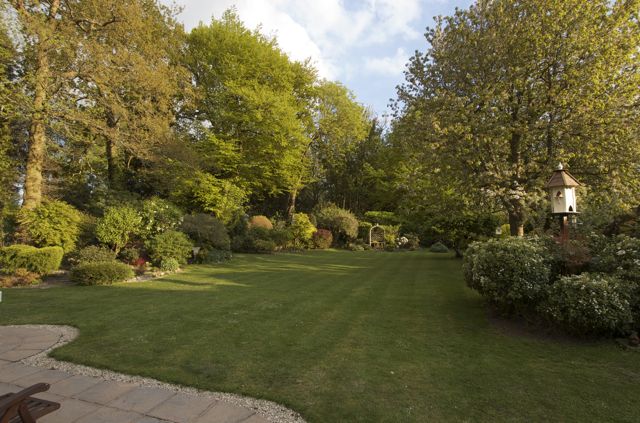
Rosemary Sutcliff’s garden, now in 2011 | Sutcliff Discovery of the Day

Here is  photo kindly sent to me by Stephen Walby, who lives in the house where Rosemary Sutcliff wrote most of her books. This is how I remember her garden, looking out from her study or next to it. And  it may be what David Sutcliff recalls in a very recent post on this blog, at the You Write! section.

Rosemary Sutcliff's garden in 2011 (post her death in 1992)

Rosemary Sutcliff inspired and influenced | Author Ben Kane

Hardback cover of Ben Kane's The Silver EagleBen Kane, himself now an acclaimed author of Roman novels, has posted on his own website an homage to Rosemary Sutcliff which concludes:

I wasn’t made aware of quite how deep The Eagle of the Ninth had sent roots into my mind until, at the age of 31 and more than twenty years after I’d read the book, I first set my eyes on the incredible structure that is Hadrian’s Wall. Read More »