Someone asks on Twitter:
“Suggestions please: great fiction for 10-year-old with very inquiring mind. She’s finished Potter, loves Morpurgo, didn’t like Hunger Games”.
Someone replies to suggest. Rosemary Sutcliff.
SO……Which in particular?
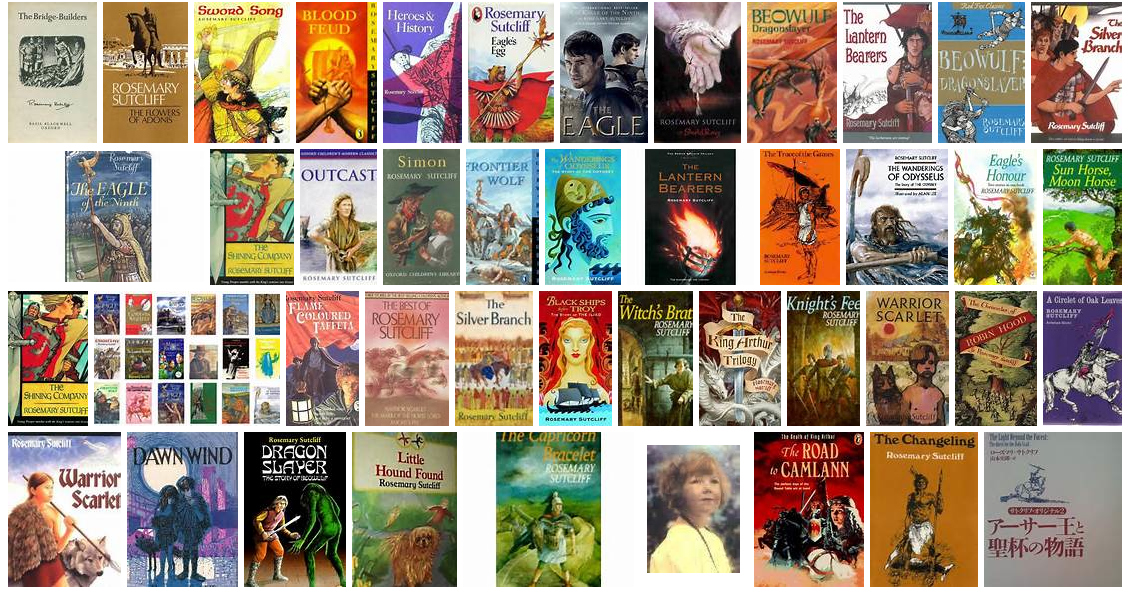

Trawling the internet, researching libraries and databases, and occasionally from material sent to me, I discover things I did not know much about, or indeed at all! There can be more than one Discovery of the Day.
Someone asks on Twitter:
“Suggestions please: great fiction for 10-year-old with very inquiring mind. She’s finished Potter, loves Morpurgo, didn’t like Hunger Games”.
Someone replies to suggest. Rosemary Sutcliff.
SO……Which in particular?
I have just discovered the Google Books Ngram Viewer. When you enter phrases it displays a graph showing how those phrases have occurred in a corpus of books (e.g. in “English”, “American English”, “British English”, ”English”, “English Fiction”, “French”) over the selected years. I tried comparing Rosemary Sutcliff, with Geofrrey Trease, Georgette Heyer, JK Rowling, and Terry Pratchett, in the US and UK. This clearly shows the rise and decline in attention to the books of Rosemary Sutcliff.

If any who read this blog share a concern from family experience about tackling bowel cancer, and are moved to make a donation, I note that my daughter Rowan Rosemary Lawton, named in honour of Rosemary Sutcliff, is running to raise funds for the UK Charity Beating Bowel Cancer. See here.

Rosemary Sutcliff wrote a monograph about Rudyard Kipling, who was a major influence on her approach to writing stories for children and young adults, and historical novels. From the introduction:
My schooling began late, owing to a childhood illness, and ended when I was only fourteen, owing to my entire lack of interest in being educated. But I showed signs of being able to paint, and so from school I went to art school, trained hard, and eventually became a professional miniature painter. I did not start to write until the end of the War, but now I have switched completely from one medium to the other, and it is several years since I last touched paint.’
Of the Kipling book she said, ‘My reason for writing this monograph will be obvious to anyone who reads it: I have loved Kipling for as long as I can remember.
When Geoffrey Trease began writing historical fiction for children, it was a minor and despised field, treasured not for any literary merit but because it helped to nurture the children of Britain.
 ROSEMARY SUTCLIFF (1920-92)