Rosemary Sutliff speaks about her approach to Arthurian Legend (1986)

Rosemary Sutcliff was interviewed by Raymond H Thompson (in 1986) for a series of interviews with Arthurian authors.  She spoke of her research, and the influences which led her to her own version of the Arthurian legend in the best-selling Sword at Sunset, first published in 1963.

… I did not discover the historical side of Arthurian legend until I was eighteen or nineteen, when I read two intriguing books by some absolute crackpot called Dayrel Reid: inspired crackpots are very special when you find them. One was called The Battle for Britain in the Fifth Century; the other was called The Rise of Wessex. They dealt with the Dark Ages, but particularly with the Arthurian legend and with the possibilities of an historical Arthur. I was fascinated by this idea, and I set off looking for all the other clues that I could find.  Read More »

E B White’s dog didn’t answer the telephone

Like Rosemary Sutcliff, E B White loved his dogs! At the intriguing Letters of Note website, is a wonderful letter of his, in response to their complaint that he was harbouring an unlicensed dog. It starts:

I have your letter, undated, saying that I am harboring an unlicensed dog in violation of the law. If by “harboring” you mean getting up two or three times every night to pull Minnie’s blanket up over her, I am harboring a dog all right. The blanket keeps slipping off. I suppose you are wondering by now why I don’t get her a sweater instead.

It continues at: Letters of Note: She doesn’t answer the phone.

Rosemary Sutcliff (1920-92) and potential paralympian Henry Pickering (1999-now) transcend disabilities

Yesterday I met an engaging and inspiring young teenager, Henry Pickering, packing purchases for customers at the farm shop in Market Harborough, as part of a fund raising initiative for CP Sport. He has cerebral palsy, but I discovered in conversation that he is a dedicated, ambitious, swimmer. I suspect he is as talented as he was modest. I asked him if he was any good, and learned that he aims to compete in the paralympics in eight or even possibly four years time. An adult from CP Sport endorsed how realistic at least the eight year aim was. Henry made it very easy and very enjoyable to put some money in the collecting bucket. But he also set me thinking about transcending ‘disability’, and thus of course about Rosemary Sutcliff. She would have urged Henry on, although I got the strong feeling that he needed no urging!

I recall that she wrote in the catalogue for an exhibition some  thirty years ago: “Dear (Able-Bodied) Reader, if ever in Athens or Tooting or Timbuktu, you find yourself about to take refuge in the ‘does he take sugar’ approach to someone disabled, do think again”.

Career-wise, I’m one of the lucky ones. My job, as a writer of books, is one of the few in which physical disability presents hardly any problems. I would claim that it presents no problems at all but my kind of book needs research, and research is more difficult for a disabled person. Read More »

Map of Roman Britain about AD410

Source: Wikipedia on Roman Britain

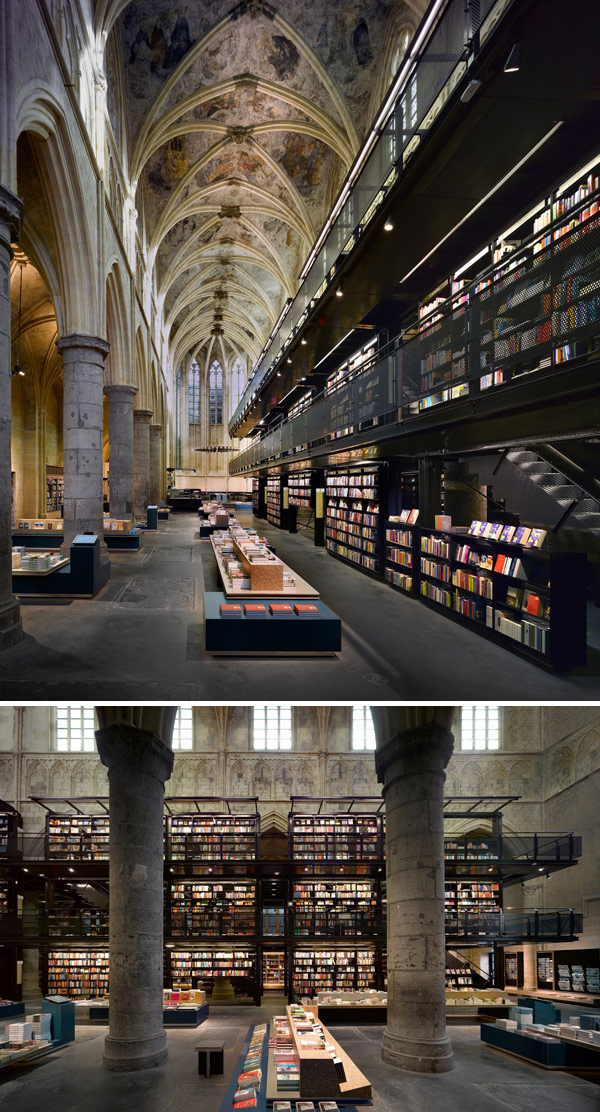
The 20 Most Beautiful Bookshops in the World

…  bookstores so beautiful they’re worth getting out of the house (or the country) to visit, whether you need a new hardcover or not. We can’t overestimate the importance of bookstores — they’re community centers, places to browse and discover, and monuments to literature all at once — so we’ve put together a list of the most beautiful bookstores in the world, from Belgium to Japan to Slovakia.

via Flavorwire » The 20 Most Beautiful Bookstores in the World.