For award-winning, internationally-acclaimed author Rosemary Sutcliff (1920-92). By Anthony Lawton: godson, cousin & literary executor. Rosemary Sutcliff wrote historical fiction, children's literature and books, films, TV & radio, including The Eagle of the Ninth, Sword at Sunset, Song for a Dark Queen, The Mark of the Horse Lord, The Silver Branch, The Lantern Bearers, Dawn Wind, Blue Remembered Hills.
From The Bookbanter Blog a 2008 reviewof the Rosemary Sutcliff book, a best-selling historical novel for adults, Sword at Sunset which is about King Arthur. It is one of several books by Rosemary Sutcliff about Arthur.
Sutcliff’s early medieval world is not as ‘dark age’ as normally depicted in fiction, but thriving with trade and societal infrastructure across Europe still seemingly intact. Artos the Bear spends the beginning of the book traveling to southern France where he looks to purchase strong breeds of horses to bring back to Britain to create a strong cavalry force to fight against the invading Anglo Saxons and maintain the British control and rule.
OUP: UK General Catalogue
To my despair I discover today that a couple of years on from first pointing it out, Rosemary’s first publisher STILL cannot spell her name right – here in a ‘book box’ for schools. What sort of example is that? I was onto them via our agents and it has made no difference..
Rosemary Sutcliff once wrote (quoted in the Oxford Companion to Children’s Literature):
“there’s a great loneliness about having any kind of handicap in a world which in general doesn’t, however much you get to the stage where neither you nor anybody else notices. You tend to create somebody on your side of the barrier who will talk your own language.”
(I have blogged an article she wrote about disability before)
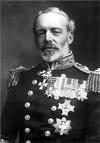
An early unpublished book was called Wild Sunrise. It was about the Roman invasion of Britain told from the British viewpoint. The hero was Cradoc, a name Rosemary used later in The Eagle of the Ninth and in Sun Horse, Moon Horse. (Her father, who I knew as Uncle George, had a naval hero called Admiral Sir Christopher Cradock, who went down with his flagship at the battle of Coronel in 1914). Wild Sunrise disappeared, which was as well, she said in her memoir Blue Remembered Hills (1983), ‘because so much of me was in it, naked and defenceless’
Source: Oxford Dictionary of National Biography. Article on Rosemary by Gilian Avery
‘My schooling began late, owing to a childhood illness, and ended when I was only fourteen, owing to my entire lack of interest in being educated. But I showed signs of being able to paint, and so from school I went to art school, trained hard, and eventually became a professional miniature painter. I did not start to write until the end of the War, but now I have switched completely from one medium to the other, and it is several years since I last touched paint.’ Of the Kipling book she said, ‘My reason for writing this monograph will be obvious to anyone who reads it: I have loved Kipling for as long as I can remember.’