Rosemary Sutcliff’s thank-you address to the American Children’s Literature Association in Arbor, Michigan, 19th May 1985 | For the Phoenix Award for The Mark of the Horse Lord

Rosemary Sutcliff sent an address to the Children’s Literature Association in Arbor, Michigan, 19th May 1985 when she received the Phoenix Award for The Mark of the Horse Lord. This is an excerpt.

The Mark of the Horse-Lord  is one of my best-beloved books, amongst my own, and has remained so warmly living in my mind, though I have never re-read it, that when I heard that it had won an award for a book published twenty years ago, my first thought was “How lovely!! But my second was, ‘But it can’t be anywhere near twenty years old; it’s one of my quite recent books; there must be some mistake!” And I made all speed to get it out of the bookcase and look at the publication date, to make sure. And having got it out, of course I started reading it again.

Re-reading a book of my own is for me (and I imagine for most authors) a faintly nerve-wracking process, Read More »
Rosemary Sutcliff in German and Germany | With Verlag Urachhaus

From Rosemary Sutcliff’s  German publisher, Verlag Urachhaus, a brief biography:

Rosemary Sutcliff wurde am 14. Dezember 1920 in England geboren und starb am 23. Juli 1992.

Sie besuchte eine Kunstschule und arbeitete zunächst als Malerin, bis sie Mitte der vierziger Jahre zum Schreiben fand.

Trotz ihrer starken Behinderung durch die Still’sche Krankheit, an der sie seit ihrem zweiten Lebensjahr litt, pflegte sie von jedem ihrer Romane wenigstens drei handgeschriebene Entwürfe anzufertigen, ehe sie mit ihrer Arbeit zufrieden war.

Intensiv an Geschichte, besonders derjenigen Großbritanniens, interessiert und im Erzählen hoch begabt, hat sich Rosemary Sutcliff mit ihren Kinder- und Jugendbüchern zu historischen Themen weit über England hinaus einen Namen gemacht.

Ihre Bücher sind in vielen Sprachen erschienen und mehrfach ausgezeichnet worden. 1975 erhielt sie als geniale und kompromisslose Chronistin den Orden des British Empire für ihre herausragenden Verdienste um die Jugendliteratur.

Als die englische Originalausgabe vom Lied für eine dunkle Königin (Song for a Dark Queen) 1978 erschien, wurde sie mit dem feministischen Literaturpreis The Other Award ausgezeichnet.

Für Morgenwind (Dawn Wind) erhielt Rosemary Sutcliff den begehrten New York Herald Tribune Preis.

Im März 2000 stellte Jean-Claude Lin Rosemary Sutcliff in dem Lebensmagazin a tempo vor und im Februar 2009 schrieb Ute Hallaschka in  der Rubrik weiterkommen über Ein Leseleben mit Rosemary Sutcliff.

Source here: Verlag Urachhaus website

Celebrating Chinese New Year Eve of the Year of the Horse with a Minstrel, a Troubador and a Roundabout Horse

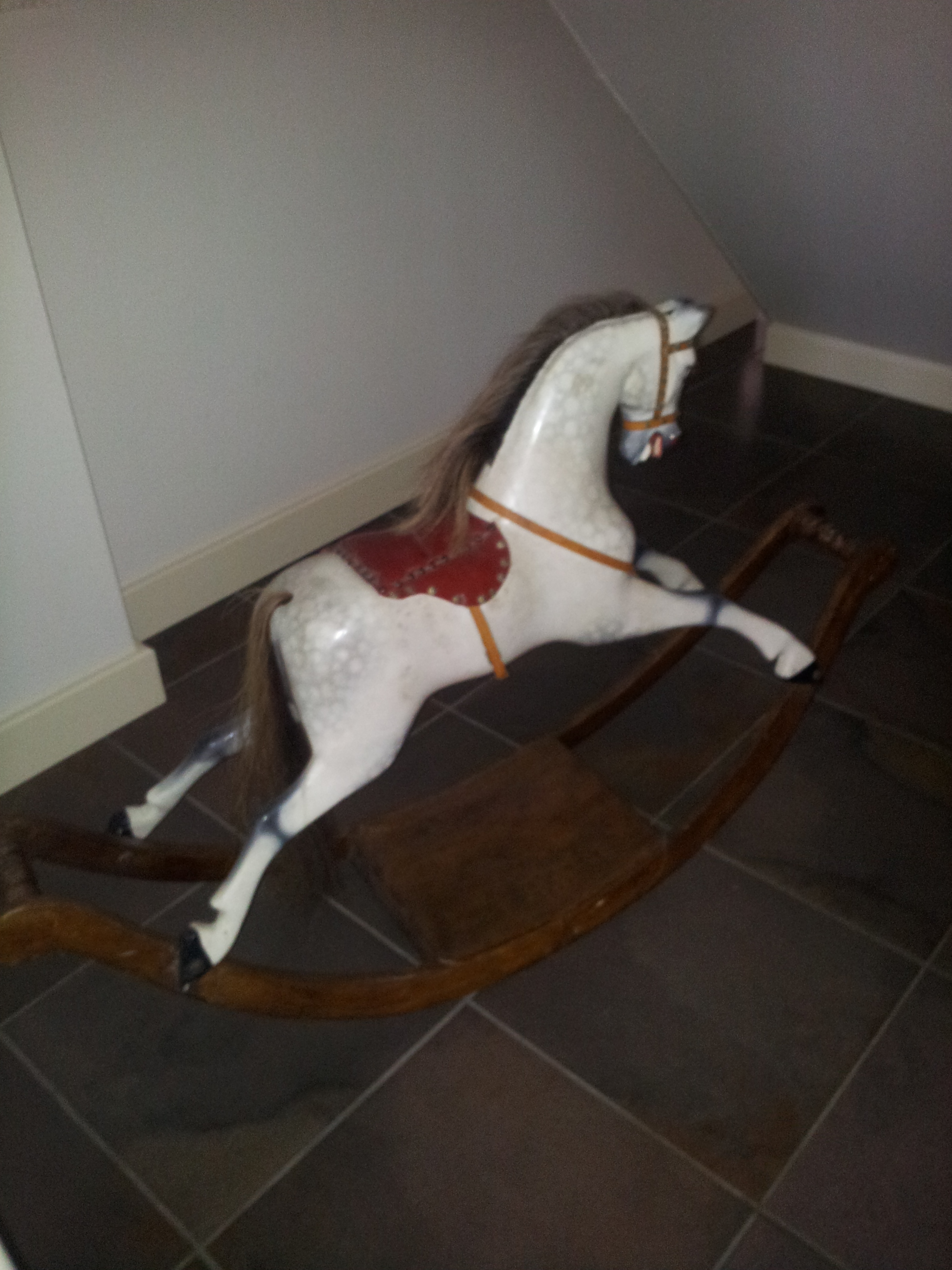
Rosemary Sutcliff’s rocking-horse Troubador

It is, I think, the eve  of Chinese New Year – the next year is the year of the horse. So a little celebration with a picture again of Rosemary’s beloved Troubadour, now at home here in Leicestershire countryside and perhaps preparing to ride the fields on Midsummer Eve? Why? The answer perhaps is to be found in Rosemary’s lovely little story The Roundabout Horse, also pictured. And she was, according to academic Margaret Meek, writing in Books for Keeps.

Cover of The Roundabout Horse by Rosemary Sutcliff

Songs, stories and history link Pete Seeger and Rosemary Sutcliff?

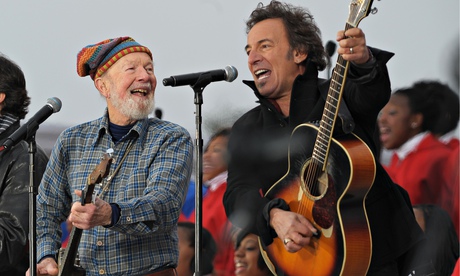
Pete Seeger and Bruce Springsteen

Bruce Springsteen turned to the work of Pete Seeger – the folk musician and activist who died yesterday aged 95 – to re-energise himself. As Richard Willams has put it in The Guardian today:

When Springsteen recognised the need to drag himself out of a becalmed period at the start of the new millennium, it was to Seeger’s music that he turned for inspiration. The Seeger Sessions, with their joyful sing-along versions of We Shall Overcome and Jacob’s Ladder, would be the catalyst for his artistic regeneration.

It was the perfect of example of Seeger’s belief in the folk process, the invisible but enduring mechanism by which source material survives being handed on and transformed at the hands of successive eras. Speaking to Alec Wilkinson of the New Yorker, Springsteen remarked that Seeger ‘had a real sense of the musician as historical entity – of being a link in the thread of people who sing in others’ voices and carry the tradition forward … and a sense that songs were tools, and, without sounding too pretentious, righteous implements when connected to historical consciousness’.

As with songs so too with the stories Rosemary Sutcliff re-told (such as Tristan and Iseult) or re-imagined (her many works of historical fiction). Re-working Springsteen, we might perhaps say that Rosemary Sutcliff had a real sense of being a link in the thread of people who tell stories and carry  tradition forward, and a sense that stories were tools, cultural and social implements when connected to historical consciousness?

Source of quotes here.