For award-winning, internationally-acclaimed author Rosemary Sutcliff (1920-92). By Anthony Lawton: godson, cousin & literary executor. Rosemary Sutcliff wrote historical fiction, children's literature and books, films, TV & radio, including The Eagle of the Ninth, Sword at Sunset, Song for a Dark Queen, The Mark of the Horse Lord, The Silver Branch, The Lantern Bearers, Dawn Wind, Blue Remembered Hills.
The Carnegie Medal for 2013 is awarded today. The Medal is awarded every year in the UK to the writer of an outstanding book for children. (2013 shortlist here).
The eminent Rosemary Sutcliff (1920-92) won the (former) Library Association Carnegie Medal in 1959 for her historical novel for children The Lantern Bearers (she wrote for children”aged 8 to 88″, she said). She was runner-up with Tristan and Iseult in 1972. Read More »
In September last year I posted at my parallel Rosemary Sutcliff Facebook page:
…a warm welcome to all who have ‘liked’ here in recent weeks …. I want to collect comments from people here about Rosemary, her books, what you have read, and why you love it…Comment away here and please do share this request.
I found this amongst things of Rosemary Sutcliff’s as I cleared up my house for a move to the country from Leicester city. She was a great lover of nature and wildlife.
Abernethy Forest is a coniferous forest stretching from the Braes of Abernethy in the east to the River Spey in the west, and from the valley of the River Spey south into the Cairngorm Mountains. Apparently at Loch Garten there is an osprey nesting site managed by the RSPB. A bit of internet sleuthing tells me : “The area is also important for its invertebrate fauna which includes 350 species of beetle, 11 species of dragonfly and over 280 species of moths and butterflies.”
The last Roman-British wearer of the dolphin ring, Owain is the only survivor of a Viking raid and the great battle of Aquae Sulis. Just fourteen years old, his father and brother die at the battle but he eventually makes his way to a peaceful Saxon settlement where he is made thrall to a Saxon family. Travelling there he meets a half-wild girl whom he cares for but is forced to leave behind when she falls ill. They meet up again after many years apart, still so in tune with each other that they are able to understand each other’s wordless messages. During his years of service he discovers understanding and even friendship, and loyalty for the people who were once his enemies. His freedom earned, he shoulders the weight of the Saxon household rather than betray a promise to his former master.
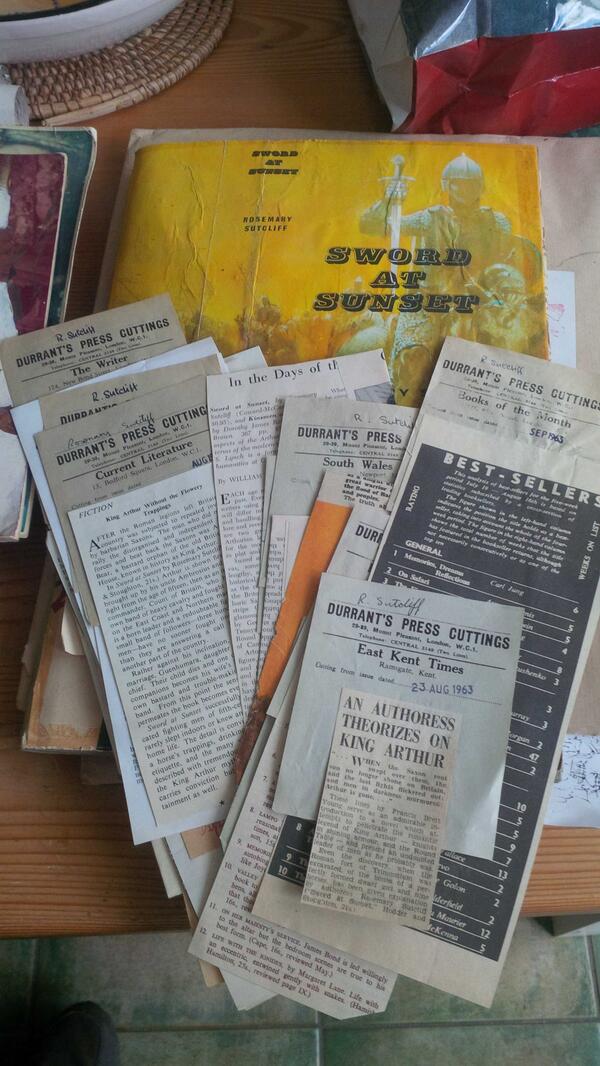
Recent Twitter post @FurnissLawton (my daughter, a literary agent) commented “How authors used to collect press cuttings @rsutcliff‘s ‘Sword at Sunset’ 1963″ with a picture pic.twitter.com/ZzpHjur2ay


 ROSEMARY SUTCLIFF (1920-92)