The New York Public Library recommends historical fiction by Rosemary Sutcliff

Regular commenter on this blog about historical fiction and children’s literature great, Rosemary Sutcliff, Anne finds it “a pleasant surprise to see Rosemary Sutcliff’s novels recommended as cool teenage reads in the New York Public Library’s Stuff For the Teen Age blog”. (Thank you, Anne, for pointing to this at the You Write! tab and page). It starts:

Who says that all historical fiction is dull and boring? If done correctly, historical fiction is not dull at all. It’s time travel in a book. Who hasn’t imagined being transported back through time to experience what life was like during a different period in history? I particularly love reading stories that are completely out of my realm of knowledge and experience and have a sense of the romantic about it—novels about war, warriors and (ahem) gladiators tend to fit that bill.

One of the more well known authors of this type of historical fiction is Rosemary Sutcliff, a British author who primarily wrote stories set during Roman-occupied Britain circa 1st-5th centuries. Despite being set almost 2000 years ago, her books are still filled with ideas that we can all relate to today: belonging, honor, family, loyalty and pride. More interesting for us, her books are also filled with plenty of bloody battles, dirty fights, searing betrayal and love.

Source: Historical Fiction Part 1: Gladiators, Roman Soldiers and Slaves | The New York Public Library

Michael Gove does not include pupils as interested parties in National Currriculum

This blog is not about education (per se), but Rosemary Sutcliff – who in fact did not go to school until about ten years old, and left at fourteen, but who was passionate about engaging and exciting young people and children. She would, I suspect, have found  it unsurprising but depressing that Read More »

US School guides summer reading of Rosemary Sutcliff’s The Eagle of the Ninth

I found that a US School – St Sebastian’s in Needham, MA – was encouraging summer reading of Rosemary Sutcliff’s children’s historical novel  The Eagle of the Ninth. I was delighted of course, but wondered if the questions would encourage an emotional and reflective, as well as descriptive, reaction to the novel. Am I being churlish?

History 8 – Summer Reading Guide

The Eagle of The Ninth by Rosemary Sutcliff Where does this historical novel take place?

What are the modern day countries that the story takes place in?

In your atlas find each of the places mentioned in the List of Place-Names at the back of the book.

How does these locations relate to the Roman Empire?

Who are the characters in this novel?

How do they fit in to the Roman Empire?

What are some differences between the Roman occupiers and the native residents of the north and the south?

If you have seen the movie, what differences are there from the book?

Bestselling author Rosemary Sutcliff had an “entire lack of interest in being educated”!

Here in the UK government ministers are obsessing about streaming within school education. They assume everyone is interested in being educated at school. Rosemary Sutcliff wasn’t …

My schooling began late, owing to a childhood illness, and ended when I was only fourteen, owing to my entire lack of interest in being educated. But I showed signs of being able to paint, and so from school I went to art school, trained hard, and eventually became a professional miniature painter. I did not start to write until the end of the War, but now I have switched completely from one medium to the other, and it is several years since I last touched paint.

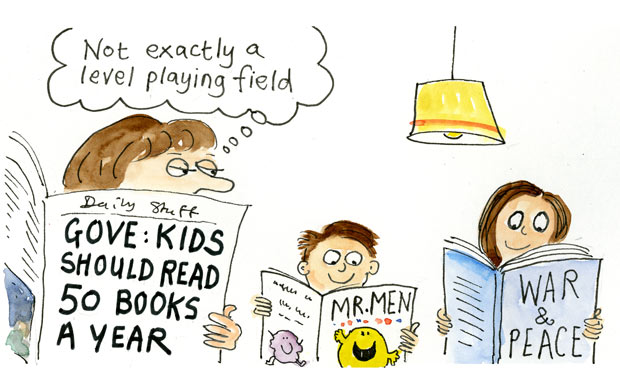
Children ‘should read 50 books a year’, including Rosemary Sutcliff says Michael Gove

I have just caught up with the Education Secretary’s proposition that all pupils should read 50 books a year. I am  not sure what I think about the overall proposition. I fear I do not fully read 50 books a year … But at least Michael Gove does include Rosemary Sutcliff on his list of authors to be studied by pupils of all ages ! In addition to Rosemary, he also spoke of :  JK Rowling, CS Lewis, Philip Pullman, Kenneth Grahame,  Alan Garner and Ursula Le Guin. Any views both about the proposition, and about the 50?

At the Rosemary Sutcliff Facebook page Harriet Connides is refreshingly direct and very clear what she thinks of Mr Gove and his suggestion …

Guardian Cartoon on Michael Gove's 50 book proposition