John Rowe Townsend on Rosemary Sutcliff | “A body of work rather than a shelf of novels”

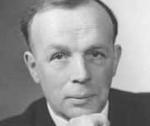
John Rowe Townsend, author, who has died aged 91

Sad today to learn of the death of John Rowe Townsend, albeit aged 91, who The Guardian describe in their obituary as “not only a dominant figure in the academic study of children’s literature, but … a seminal influence on the entire development of modern children’s books.

Rosemary Sutcliff—as historical novelist and children’s book writer—was the subject an essay by him in his 1971 book  A Sense of Story. He observed  that Rosemary Sutcliff’s books amount to  ”a body of work rather than a shelf of novels”.

Day to day, minute to minute, second to second the surface of our lives is in a perpetual ripple of change. Below the immediate surface are slower, deeper currents, and below these again are profound mysterious movements beyond the scale of the individual life-span. And far down on the sea-bed are the oldest, most lasting things, whose changes our imagination can hardly grasp at all. The strength of Rosemary Sutcliff’s main work—and it is a body of work rather than a shelf of novels—is its sense of movement on all these scales. Bright the surface may be, and vigorous the action of the moment, but it is never detached from the forces underneath that give it meaning. She puts more into the reader’s consciousness than he is immediately aware of.
Rosemary Sutcliff followed in Geoffrey Trease’s writing footsteps in the 1950s, but not his political footprints

That Rosemary Sutcliff followed in the footsteps of children’s writer Geoffrey Trease was the accurate claim of an intriguing article a couple of years ago in The Morning Star (the link I had does not now work, but I have found the article— below —on Wayback Machine). I was moved to write to the editor:

Although you carry a fascinating article yesterday (February 25, 2010) by Farah Mendlesohn about Geoffrey Trease, may I correct a couple of errors of fact? If Rosemary Sutcliff (sic) did indeed “follow” in “Trease’s footsteps”, she started following in the 1950s not the 1960s as stated, with her award-winning Lantern Bearers and The Eagle of the Ninth which were both published in that earlier decade.

Furthermore, in all decades her name was spelled without the ‘E’ … As to the detail about Trease, whilst not a matter of fact, I think it interesting that in one respect Rosemary Sutcliff certainly did not follow in his footsteps. I grew up listening to her, as a close relative. I heard how much she treasured Trease’s work, but I do not think that she shared the political leanings that the article explores.

The man who told the people’s stories

I will choose a good story over absolute historical accuracy | Rosemary Sutcliff on writing historical fiction

Since I am a writer, not an historian, I will sacrifice historical accuracy. I really very seldom have to do it, and then it is only a matter of perhaps reversing the order of two events, or something like that. But if it does come to the crunch, I will choose a good story over absolute historical accuracy.

Source: Interview with Rosemary Sutcliff  by Raymond H Thompson (here, on this blog)


Rosemary Sutcliff’s thank-you address to the American Children’s Literature Association in Arbor, Michigan, 19th May 1985 | For the Phoenix Award for The Mark of the Horse Lord

Rosemary Sutcliff sent an address to the Children’s Literature Association in Arbor, Michigan, 19th May 1985 when she received the Phoenix Award for The Mark of the Horse Lord. This is an excerpt.

The Mark of the Horse-Lord  is one of my best-beloved books, amongst my own, and has remained so warmly living in my mind, though I have never re-read it, that when I heard that it had won an award for a book published twenty years ago, my first thought was “How lovely!! But my second was, ‘But it can’t be anywhere near twenty years old; it’s one of my quite recent books; there must be some mistake!” And I made all speed to get it out of the bookcase and look at the publication date, to make sure. And having got it out, of course I started reading it again.

Re-reading a book of my own is for me (and I imagine for most authors) a faintly nerve-wracking process, Read More »

Chronicler of Occupied Brittania | Rosemary Sutcliff’s life and work | Obituary from The Guardian newspaper

Let us not be solemn about the death of Rosemary Sutcliff CBE, who has died suddenly, aged 72, despite the progressively wasting Still’s disease that had been with her since the age of two. She was impish, almost irreverent sometimes, in her approach to life. Her favourite author was Kipling and she once told me she had a great affection for The Elephant’s Child – because his first action with his newly acquired trunk was to spank his insufferably interfering relations.

But it was Kipling’s deep communion with the Sussex countryside and its history that was her true inspiration. Settled as an adult in Arundel, Rosemary shared with him his love for his county as well as his vision of successive generations living in and leaving their mark upon the landscape.

Rosemary Sutcliff, at the peak of her form in her ‘Roman’ novels, was without doubt an historical writer of genius, and recognised internationally as such. Read More »