Rosemary Sutcliff’s novel about Alkibiades | The Flowers of Adonis

In the introduction to her historical novel  The Flowers of Adonis, Rosemary Sutcliff wrote:

I have provided a possible explanation for Antiochus’s insane foolhardiness when left in command of the Athenian Fleet, because Thucidides’s bald account is so unbelievable (unless one assumes that both Antiochus and Alkibiades were mentally defective) that any explanation seems more likely than none.
Alkibiades himself is an enigma. Even allowing that no man is all black and all white, few men can ever have been more wildly and magnificently piebald. Like another strange and contradictory character Sir Walter Raleigh, he casts a glamour that comes clean down the centuries, a dazzle of personal magnetism that makes it hard to see the man behind it. I have tried to see. I have tried to fit the pieces into a coherent whole; I don’t know whether I have been successful or not; but I do not think that I have anywhere falsified the portrait.
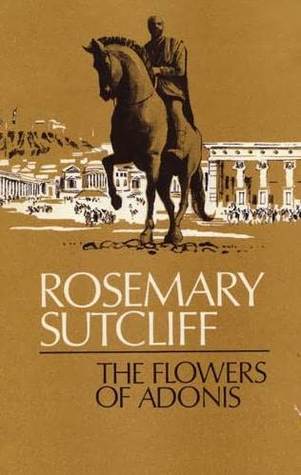
The Flowers of Adonis by Rosemary Sutcliff; book cover

For those parents out there who want their children to move on from J K Rowling

Robin Rowland used to write a blog about his writing life (he was a TV journalist) called The Garret Tree. Some eight years ago he posted When I waited for Rosemary Sutcliff

When I was a kid, Rosemary Sutcliff was my J. K. Rowling. In the early 1960s, I couldn’t wait to get my hands on the next Sutcliff. I lived in northern British Columbia and the waiting involved finding out when the book would arrive in the public library. In Kitimat, British Columbia, a town carved out of the bush, there were no bookstores. The local variety store and the stationary store both carried popular paperbacks delivered at the same time as magazines. 

For me, Rosemary Sutcliff created a world just as magic as Rowling’s. Somewhat like Hogwarts and Harry it was an alternative British universe. Many of her books followed one scattered family for a millennium or more, through the history of Britain from the ancient Celts through the Roman conquest and occupation, the collapse of the empire, the Saxon invasion and into the Middle Ages. It was both familiar (especially since my parents were British) and  Read More »

John Bell (d. 2008) was Rosemary Sutcliff’s first editor at OUP

Born in Hull in 19222, John Bell – one time editor at OUP, who died aged 85 in 2008 – was instrumental in helping the career of Rosemary Sutcliff, as he was for leading post-war children’s authors such as William Mayne, Philippa Pearce and Rosemary Sutcliff.

He went to Oxford University, but while he was still an undergraduate World War II started. After the war ended, he returned to Oxford and graduated in 1948. He  joined the children’s book team at Oxford University Press, based in London, and was responsible for Rosemary Sutcliff’s early books.

In 1956, he transferred to the publisher’s literary team. In the mid-80s, when he retired he set up a press of his own at his home cottage at Wootton-by-Woodstock – the Backwater Press . He published several little  items from or for Rosemary Sutcliff.

Sources: Yorkshire Post, February 23, 2008; The Times (London), February 18, 2008.

Rosemary Sutcliff’s Carnegie-medal-winning The Lantern Bearers adapted for radio by Felix Fenton (1961)

I recently discovered  Felix Felton (1911 – 72) who was a British actor, and a radio director and author. In 1961 he adapted Rosemary Sutcliff’s The Lantern Bearers (published in 1959) for a six-part series for Children’s Hour for BBC Radio. In 1962 he also adapted  Dawn Wind (1961) for radio, playing the role of Einon Hen himself.

Sword at Sunset Arthurian novel by Rosemary Sutcliff an ‘odd one out’ | The Independent newspaper in Dec 2012

Historian, writer and journalist  Christina Hardyment reflected on Sword at Sunset by Rosemary Sutcliff in response to the anniversary edition of  Sutcliff’s Arthurian adult novel – an ‘odd one out’.

Rosemary Sutcliff is most famed for The Eagle of the Ninth, but there was much more to her than that. In the 1950s, historically-minded children found her books a magic carpet into the past. I began with Brother Dusty-feet (1952) and The Armourer’s House (1951), and never looked back an insatiable interest in history has remained the backbone of my life.

In 1954, The Eagle of the Ninth introduced Marcus Flavius Aquila, a young Roman who chooses to stay in Britain after the legions leave. Seven subsequent books follow his family’s fate, usually directly. The odd book out is the fifth, Sword at Sunset, now published in a new edition to celebrate its 50th birthday. In 1963, it was firmly announced to be for adults, and given the (for their time) graphic and violent scenes of sex and slaughter, it deserved to be.

Read More »