I had not realised that Simon Scarrow dedicated his novel Gladiator: Fight for Freedom to Rosemary Sutcliff

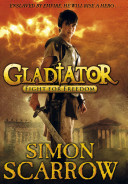

I had not realised that Simon Scarrow dedicated his novel Gladiator: Fight for Freedom to Rosemary Sutcliff
Rosemary Sutcliff needed extensive treatment for juvenile arthritis and its consequences, long before there was an National Health Service in the UK. Making a living from writing – a rarity in her times – enabled her to secure the daily support and care she needed as someone severely physically disabled, long before social security benefits properly came to the aid of those in need through physical disabilities. I believe she welcomed both NHS and disability benefits – for others as much as for herself – although she did not share the politics of those who introduced them. She certainly did not share the political perspective of Stuart Hall, a “God on the landscape of the left”, according to the ever excellent Zoe Williams in The Guardian today.
But he makes a rousing defence of the principle upon which the NHS was and should be based – in a call to principle and to action that resonated powerfully here in a left-leaning but politically inactive household where, after four years of engagement with the NHS as a result of an advanced cancer, my wife is now thriving only because of the NHS and many dedicated, skilful staff. Other posts and comments on this blog attest to Rosemary’s persistent theme about the battle between the forces of light and darkness, and dark forces are indeed undermining our NHS. So it seems necessary as well as appropriate to highlight Stuart Hall’s words here, where all else is about Rosemary’s writing and life. I hope followers will bear with me!
“How can millions of people have benefited from the NHS and not be on the streets to defend it? Come on. The NHS is one of the most humanitarian acts that has ever been undertaken in peace time. The principle that someone shouldn’t profit from someone else’s ill health has been lost. If someone says an American health company will run the NHS efficiently, nobody can think of the principle to refute that. The guiding principles have been lost.” There was a study recently investigating why America, which spends more per capita on health, has worse outcomes, and the answer was quite clear: when there is a profit motive, the rich are overinvestigated, and the poor are undertreated. People die needlessly.
So there’s quite a sound pragmatic argument against private involvement in health, but Hall’s is a blistering moral statement – who would profit from someone’s ill health? What sort of person would that be? Would you trust them with your budget, let alone your health, or the health of a loved one? The moral case is not being forcefully enough put; indeed, it is not being put at all.
Being human and all that, and 80, Hall has observed the NHS at close range recently; following a diagnosis of renal failure, he spent seven years on dialysis, but by that time, “it’s killing you and keeping you alive at the same time”. This was a very profound experience. “It gives you a different conception of yourself, a different conception of yourself in relation to others. Your wife becomes your carer. For God’s sake!”
But, of course, it has deepened his political identity as well. “I’ve always known in my head I’m not an island, but it really came across. It’s not just the kidneys – I could give you a litany of things that are wrong with me. I couldn’t go two days without someone coming in to help me. [Richard] Titmuss called it the gift relationship – you throw your bread on to the water, you don’t know who will pick it up, you don’t know if you’re going to need it later, you just give it because you have it. That’s the opposite of exchange value. It has no value.
“You recoup nothing. I’ve always thought the ego, Adam Smith’s selfish individual, was wrong. The outside world gets into our heads, there is a constant dialectic, it is ineradicable. So we have to forge consanguinity. I’ve always known that, but of course if you’re ill, it comes through much more. Have you any idea how much dialysis costs per session? Do I believe in a public health system? I sure do. With bells on.”
On a more trivial note: a rather surpising form of recognition for Rosemary Sutcliff is to appear as an example of the name ‘Rosemary’ in “Baby Names for Dummies”!


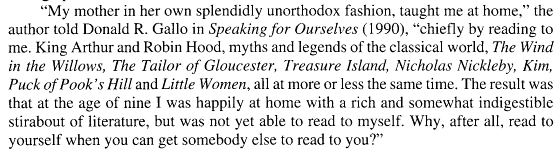
Rosemary Sutcliff’s work was documented and examined by Sandra Garside-Neville for the Historical Novels’ Society. She refers to several stories and plays which I have not documented here, I realise. I do not have copies. Can anyone supply them?
1964 The Fugitives (in Miscellany One, edited by Edward Blishen)
1966 The New Laird (radio play script)
1967 The Man Who Died at Sea (in The House of the Nightmare and other Eerie Stories, edited by Kathleen Lines)
1970 The Making of an Outlaw (in Thrilling Stories from the Past for Boys edited by Eric Duthie)
1970 Swallows in the Spring (in Galaxy edited by Gabrielle Maunder)
1986 Mary Bedell (play)
1992 The Eagle of the Ninth: Play (with Mary Rensten)
 ROSEMARY SUTCLIFF (1920-92)