For award-winning, internationally-acclaimed author Rosemary Sutcliff (1920-92). By Anthony Lawton: godson, cousin & literary executor. Rosemary Sutcliff wrote historical fiction, children's literature and books, films, TV & radio, including The Eagle of the Ninth, Sword at Sunset, Song for a Dark Queen, The Mark of the Horse Lord, The Silver Branch, The Lantern Bearers, Dawn Wind, Blue Remembered Hills.
I came across this page on the internet about who’s who in Rosemary Sutcliff‘s historical novel and re-telling of the King Arthur legend Sword at Sunset. (Without any apparent context, it intrigued me!)
People
Ambrosius–Aurelius Ambrosius, mentioned in Geoffrey of Monmouth, here Artos’ uncle Arian–Artos’ first horse; rides him through fiery walls
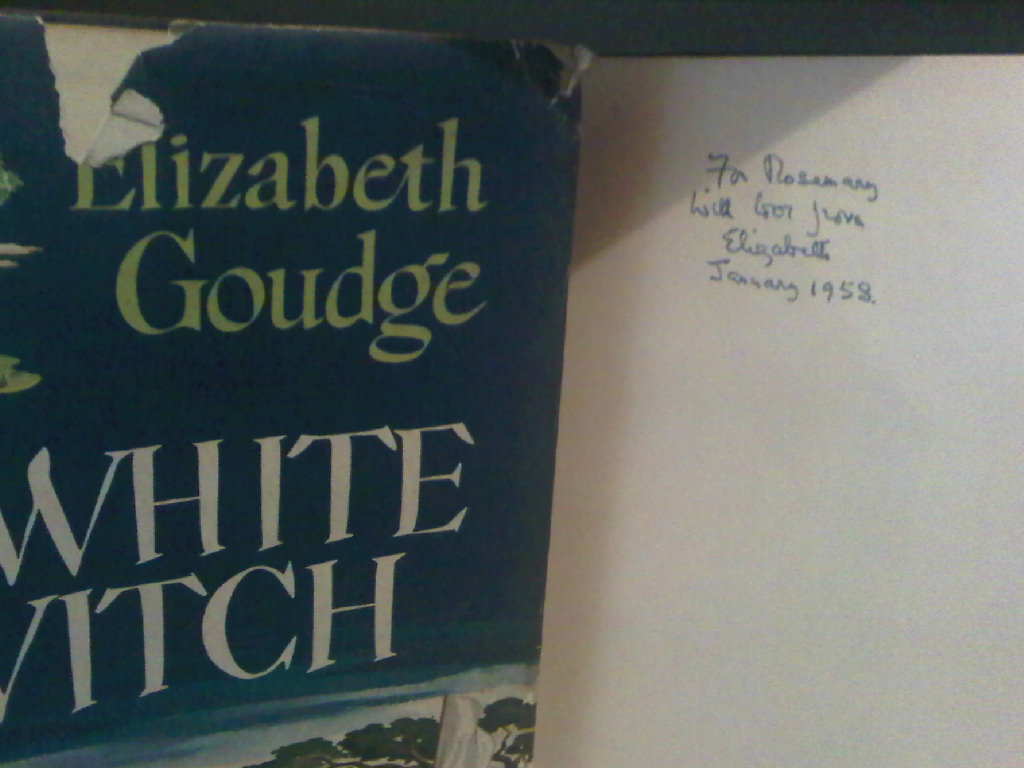
From Rosemary Sutcliff’s library, a signed front page in Elizabeth Goudge‘s famous historical novel The White Witch, set in the times of King Charles 1st. Elizabeth Goudge was awarded the Carnegie Medal in 1947 for The Little White Horse; Rosemary Sutcliff was awarded it in 1957 for her novel The Lantern Bearers.
… one day quite suddenly I knew that I was ready (to find and reconstruct Arthur), that the time had come when I really could cope with it. Most of the actual research I did for the book, apart from knowing the Arthurian story from the romance versions, was into Dark Age life and history as far as they were known. Then I worked into this setting the Arthur who seemed to me to carry weight, to be the most likely kind of person. It was very strange because I have never written a book which was so possessive. It was extraordinary–almost frightening.
It took me about eighteen months to write, and it absolutely rode me throughout the entire time. I would take the book to bed with me at night, and work there until I dropped off to sleep about two o’clock in the morning, too tired to see any more. Then I would wake up about six o’clock, still thinking about it. It was addictive. It was almost like having the story fed through to me, at times. I do my writing usually in three drafts, and I would go from the first to the second draft, from the second to the third, and find bits of the book that I had no recollection of having written at all. It was interesting, almost scary, but much of the material had this effect of being almost fed through to me, rather than being the result of my own research.
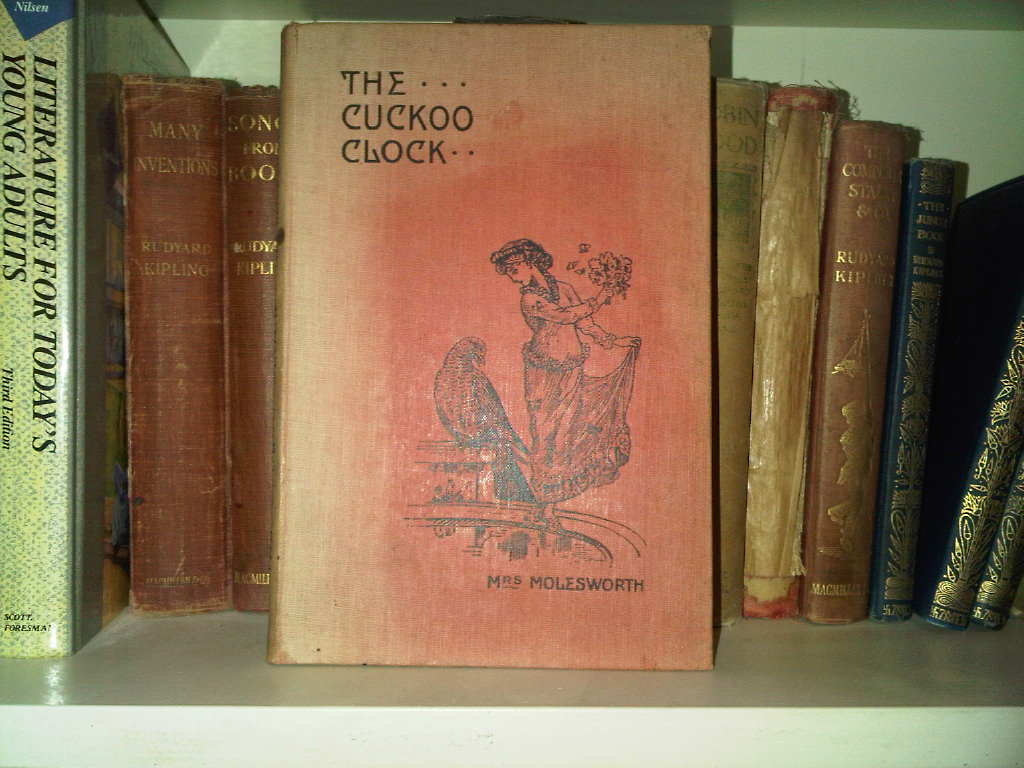
One of the books in Rosemary Sutcliff‘s library is The Cuckoo Clock by Mrs Molesworth.
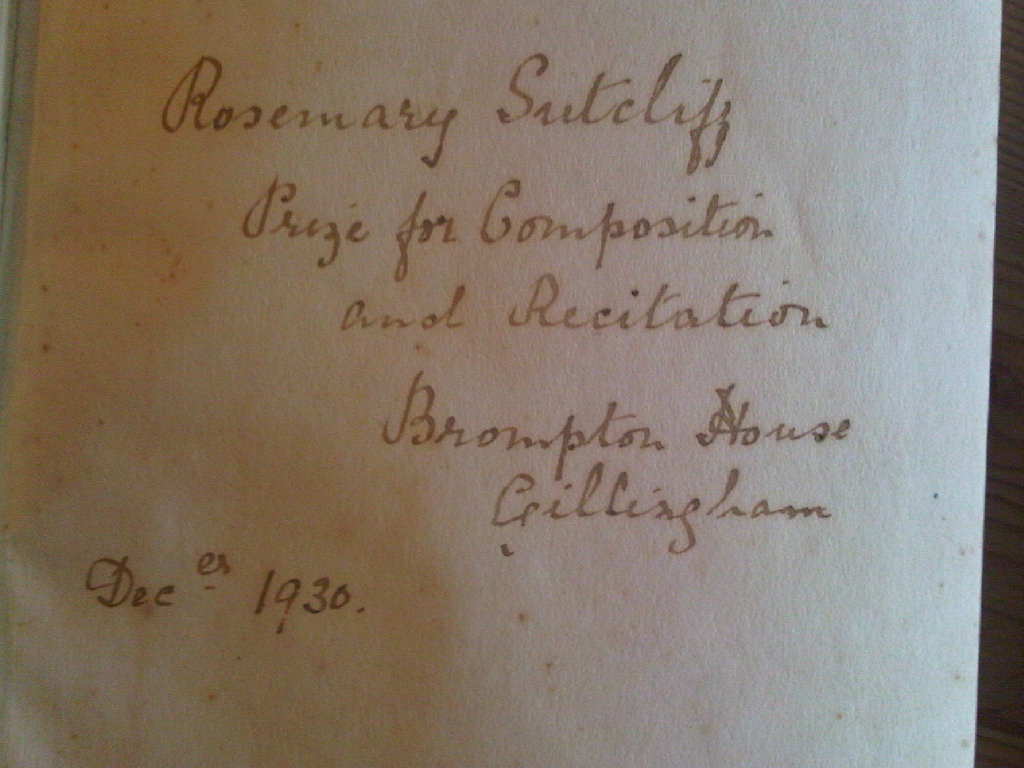
First printed in 1877, Rosemary’s edition is from 1926. She won it as a prize for ‘Composition and Recitation’ at her school – Brompton House in Gillingham. (Her father was in the navy, at Chatham docks).
Fascinating to see too, on the inside cover, is ten year old Rosemary’s elaborate signature!
The story begins:
Once upon a time in an old town, in an old street, there stood a very old house. Such a house as you could hardly find nowadays, however you searched, for it belonged to a gone-by time – a time now quite passed away.


 ROSEMARY SUTCLIFF (1920-92)