Rosemary Sutcliff selling well | Bestselling books of 2011 | The Guardian

The Guardian newspaper has presented the aggregate information on physical book sales in Britain in 2011.

Three already elderly Stieg Larsson thrillers topped last year’s all-year bestsellers table, followed by Jamie’s 30-Minute Meals (the Christmas No 1) and Guinness World Records, with One Day and The Help just outside the top 10. Glance at 2011’s chart, and you could be forgiven for wondering if 12 months have really passed.

For this was a year when old books saw off new ones, and paperbacks sent hardbacks packing. The same seven titles merely change places, with Larsson’s musty trio and David Nicholls’s and Kathryn Stockett’s two-year-old novels all given renewed sales muscle by movie versions.

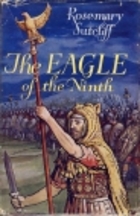
Interestingly – to me – the combined sales (some 23,500 books) of the two versions of Rosemary Sutcliff‘s 1950s historical novel The Eagle of the Ninth, whilst way down in the full charts, put her in the top twenty (by volume) of the historical and mythological fiction category. On top of that about her publisher Oxford University Press sold about 6,700 copies of The Eagle of the Ninth Chronicles (which also includes The Silver Branch and The Lantern Bearers). Highest seller by volume in historical fiction was Philippa Gregory’s The Red Queen, with nearly 200,000! And in there  in the top ten is Rosemary Sutcliff fan Ben Kane. Congratulations!

In children’s fiction, which embraces The Wimpy Kids books as well as J K Rowling, Enid Blyton and Alex Scarrow, (to highlight some very different genres of children’s book), such a volume of sales only allows Rosemary to creep in to the top hundred in about 90th place for The Eagle of the Ninth (although I have not looked to see if there are any duplicate versions of the same title in those above or below her ‘position’).

Historical Fiction Top Twenty

Title Author Volume Binding
The Red Queen Philippa Gregory 193,263 Paperback
My Last Duchess Daisy Goodwin 108,176 Paperback
Death of Kings Bernard Cornwell 64,876 Hardback
The Confession of Katherine Howard Suzannah Dunn 63,259 Paperback
Empire of Silver Conn Iggulden 62,737 Paperback
the Lady of the Rivers Philippa Gregory 51,994 Hardback
The Road to Rome: Forgotten Legion Chronicles Ben Kane 50,137 Paperback
The White Queen Philippa Gregory 46,840 Paperback
The Captive Queen Alison Weir 42,783 Paperback
Heresy S. J. Parris 42,029 Paperback
Insurrection Robyn Young 38,654 Paperback
Wolf Hall Hilary Mantel 35,516 Paperback
Conqueror Conn Iggulden 33,909 Hardback
Rome: The Emperor’s Spy M. C. Scott 26,650 Paperback
Revelation:Shardlake C. J. Sansom 25,711 Paperback
Praetorian Simon Scarrow 24,282 Hardback
Secrets of the Tudor Court Darcey Bonnette 24,020 Paperback
The Sisters Brothers Patrick deWitt 23,740 Paperback
The Eagle of the Ninth Rosemary Sutcliff 23,397 Paperback

Source: Bestselling books of 2011 – Commentary | Books | The Guardian

Click here for spreadsheet of full Guardian-Nielsen data, if you want to play …

.

The enchantments of The Witch’s Brat by Rosemary Sutcliff

Lovel, the crippled hero of Rosemary Sutcliff‘s The Witch’s Brat, is driven from his village in a shower of stones after his grandmother’s death. (The) novel (is) … crammed with careful period detail and research, the painstaking catalogues of herb-lore brought grippingly to life by the characters to whom they bring such danger.

via The enchantments of witch fiction | guardian.co.uk.

Rosemary Sutcliff’s Blood Feud historical novel was TV series The Sea Dragon

Blood Feud coverI have been researching the Rosemary Sutcliff  historical novels and retellings for children’s books which have been turned into TV and radio programmes. Sea Dragon was a version of Blood Feud made for TV in 1990. The TV series gets an average  8.1 (of 10) rating from users at ImDB. The essence of the plot is this: sold into slavery to the Northmen (Norsemen) in the tenth century, a young Englishman becomes involved in a blood feud which leads him to Constantinople and a totally different way of life.

The United States newspaper the Washington Post commented, when the book was first published in 1976, that:

Sutcliff’s gift is to recreate an era, in this case the 10th-century voyages of the Northmen and the rise of Byzantium, so convincingly that her readers accept without question the different mores of another time. The violence of the blood feud between two families set off by an accidental killing seems inevitable. No writing down here, no anachronisms, just a glorious sense of history, a sense of knowing how it was.

The Director of the TV film was Icelander Ágúst Guðmundsson; the adaptor David Joss Buckley. The lead actors were Graham McGrath (as Jestyn), Bernard Latham (as Gyrth) and Janek Lesniak (as Thormod). Other cast members were: Baard Owe as Haki; Øystein Wiik as Thraud; Pat Roach as Aslak; Trine Pallesen as Ayrun; Lisa Thorslunde as Thormod’s Mother; Eiry Palfrey as Sister Gytha; Holly Aird as Ffion; Lasse Spang Olsen as Herulf; Martin Spang Olsen as Anders; and  Anna Massey (who sadly died  in 2011) as the  Prioress.

The ‘Inside A Dog’ blog enthuses about old favourite Rosemary Sutcliff


Groucho Marx, Sig Ruman and Margaret Dumont

Groucho Marx  once said: ‘Outside of a dog, a book is a man’s best friend. Inside a dog, it’s too dark to read!’. Hence one blog about books:  Inside a Dog. The blog’s author recently caught up with The Eagle film in Australia, which prompted him to enthuse about Rosemary Sutcliff  “all over again”.

Today I finally got to see the movie based on Rosemary Sutcliff’s The Eagle Of The Ninth. That’s made me think about her books all over again – I love them!  I think she’s the greatest writer of historical fiction for children and teens in the twentieth century. In fact, judging by what I’ve read in the last eleven years, maybe the best of this century too.

Source: Rosemary Sutcliff – an old favourite | Inside A Dog.

Rereading Rosemary Sutcliff’s The Eagle of the Ninth

Rosemary Sutcliff's famous novel was first published in the UK in 1954Around the time of the release of the film The Eagle, Charlotte Higgins wrote in the Guardian: “Not just a rollicking adventure, Rosemary Sutcliff‘s The Eagle of the Ninth … is a touching true story about love and loyalty”. She enjoyed looking back on a childhood favourite that she had reread many times.

I call it a children’s story; my copy, with its gorgeous line drawings by C Walter Hodges, bears my name on the title page in barely joined-up handwriting. But Sutcliff claimed her books readable by anyone from nine to ninety, and she was right. In an interview in 1992, the year she died, she said: “I don’t write for adults, I don’t write for children. I don’t write for the outside world at all. Basically, I write for some small, inquiring thing in myself.” I have read The Eagle of the Ninth dozens of times; and as the reading self changes, so does the book. When I last read the story, it was the quality of the prose that delighted, the rightness with which Sutcliff gives life to physical sensation. A battle fought through the grey drizzle of a west country dawn is illuminated by “firebrands that gilded the falling mizzle and flashed on the blade of sword and heron-tufted war spear”. Perfect, too, is a set-piece in which Marcus, on a stiflingly hot day, puts his British hunting companion’s chariot-team through their paces. “The forest verge spun by, the fern streaked away between flying hooves and whirling wheels . . . Then, on a word from Cradoc, he was backed on the reins, harder, bringing the team to a rearing halt, drawn back in full gallop on to their haunches. The wind of his going died, and the heavy heat closed round him again. It was very still, and the shimmering, sunlit scene seemed to pulse on his sight.” Sutcliff, tellingly, has those black chariot ponies – “these lovely, fiery little creatures” – descended from the royal stables of the Iceni, the tribe who had almost cast Rome out of Britain. It is a delicately inserted hint of danger to come.

Whole article at Rereading Rosemary Sutcliff’s The Eagle of the Ninth | Books | The Guardian.